

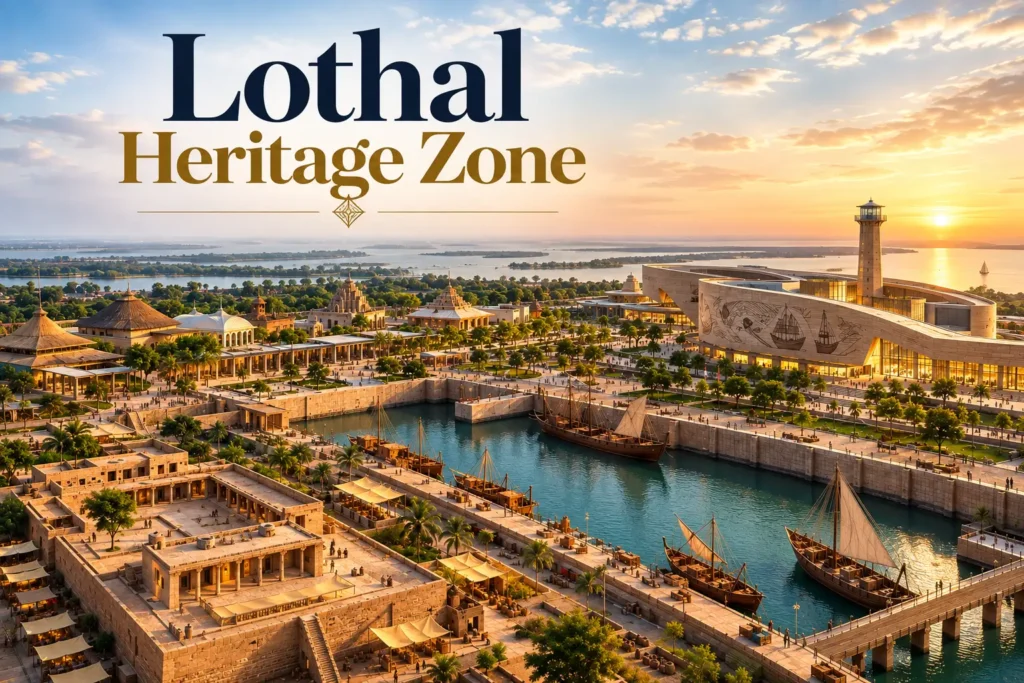
Imagine walking the streets of a Harappan port town, watching wooden ships rest in an ancient dockyard, and then stepping into pavilions that celebrate the coastal cultures of modern India. That is the promise of the Lothal Heritage Zone.
At Angel Nova, we love places where history comes alive. This zone, part of the National Maritime Heritage Complex (NMHC) in Gujarat, is one of the most ambitious heritage projects India has taken up. Here is everything you need to know about it.
1. What Is the Lothal Heritage Zone?
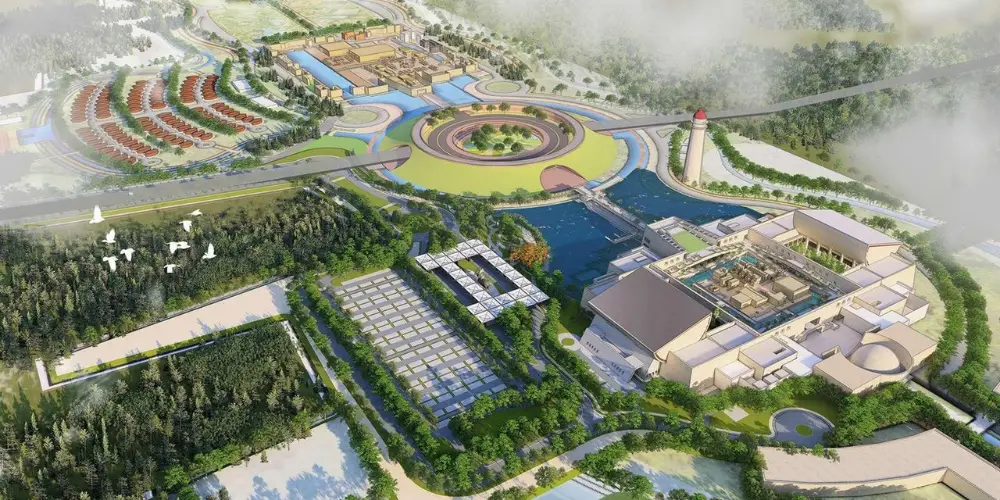
The Lothal Heritage Zone is a dedicated section of the National Maritime Heritage Complex being developed near the archaeological site of Lothal in Gujarat.
Its goal is simple but powerful: to educate and entertain visitors with the heritage of the Indus Valley Civilization and India’s long maritime legacy.
The zone has two main parts. At its heart is a recreated Lothal City along with its famous dockyard. Surrounding the city are the Coastal States Pavilions, which showcase the maritime traditions of India’s coastal states and union territories.
Together, they tell one continuous story, from the first Harappan sailors to the vibrant seafaring cultures of today.
2. Why Lothal Matters in World History
Before exploring the new zone, it helps to understand why Lothal is so special.
Lothal was one of the southernmost cities of the Indus Valley (Harappan) Civilization. It flourished around 2400 BCE, near the Gulf of Khambhat.
Archaeologists discovered the site in the 1950s. Their most remarkable find was a large brick basin widely believed to be one of the world’s oldest known dockyards.
This dockyard suggests that Harappan people understood tides, water flow, and ship handling far earlier than many once believed.
Lothal was also a busy trading hub. Beads, shell work, copper items, and seals found here point to trade links reaching as far as Mesopotamia and the Persian Gulf.
In short, Lothal is proof that India was a maritime nation thousands of years ago. The Heritage Zone is built to share that pride with the world.
3. Lothal City: A 1:1 Scale Replica Recreation
The highlight of the zone is Lothal City, envisaged as a full 1:1 scale recreation of the ancient town.
This is not a miniature model behind glass. Visitors will be able to walk through life-size streets, buildings, and public spaces, just as Harappan residents once did.
Key Areas of the Recreated City
The replica is planned to include the major parts of the original settlement:
The Acropolis – The raised upper section where the town’s leaders are believed to have lived. It likely held important buildings, baths, and drainage systems.
The Middle Town – A zone of homes and workshops showing everyday urban life.
The Lower Town – The bustling area of artisans, traders, and craftspeople, including bead makers and metal workers.
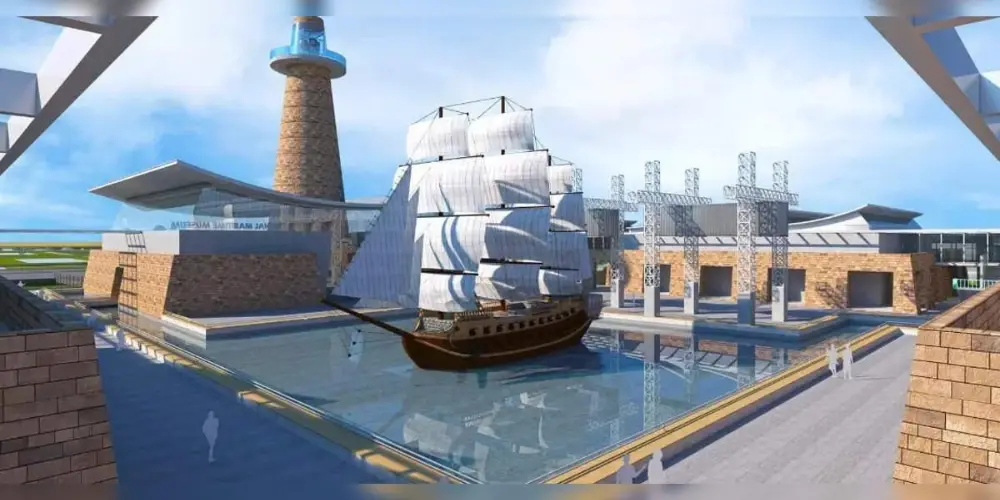
The Dockyard – The star attraction, recreating the ancient basin where ships were loaded and repaired.
Warehouses – Storage spaces that reveal how goods were sorted, sealed, and prepared for trade.
What the Experience Looks Like
The design renderings show stone-walled lanes, shaded market stalls made from bamboo and fabric, and wooden ships docked beside walkways.
Visitors stroll along paved paths lined with trees, peek into workshops, and stand beside tall-masted vessels. It feels less like a museum and more like time travel.
For students, it becomes a living textbook. For families, it’s an adventure. For history lovers, it’s a dream come true.
4. Coastal States Pavilions: India’s Coastline in One Place
Surrounding Lothal City are the Coastal States Pavilions, another major feature of the Lothal Heritage Zone.
These pavilions will be state-sponsored. Each one is designed and themed around the architecture, culture, lifestyle, and maritime heritage of a specific coastal state or union territory.
India has a coastline of over 7,500 km, and every stretch has its own story. Think of Gujarat’s dhows, Kerala’s backwaters, Odisha’s ancient sea trade with Southeast Asia, or Goa’s Indo-Portuguese heritage.
What Each Pavilion Will Showcase
The pavilions aim to highlight:
Rich heritage – The history and traditions of each coastal region.
Ship and boat building – Traditional craftsmanship, from wooden dhows to fishing boats.
Food – Coastal cuisines, which are among the most diverse in India.
Culture – Art, music, dance, festivals, and local lifestyles.
Learning Through Experience
What makes these pavilions exciting is how they share this heritage. Instead of only displays and signboards, they will use workshops, narratives, and entertainment.
Picture watching a boat-builder at work, tasting a regional seafood dish, and enjoying a folk performance, all in one afternoon.
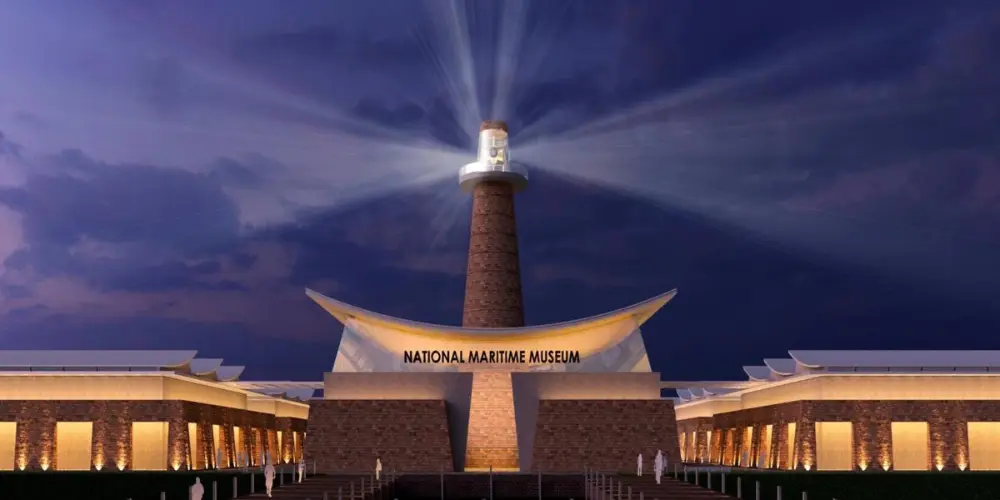
The night-time renderings show lantern-lit courtyards, ornate carved facades, and lively evening crowds. The zone looks set to be just as magical after sunset as during the day.
5. Why the Lothal Heritage Zone Is a Must-Visit
There are many reasons this destination deserves a spot on your travel list.
It’s a first for India. A full-scale, walk-through recreation of a Harappan city is a rare and ambitious idea.
It connects past and present. Lothal City shows where India’s maritime journey began, while the pavilions show how it lives on today.
It’s great for all ages. Children can explore and play, adults can learn, and seniors can enjoy a relaxed cultural outing.
It supports local culture. State pavilions give coastal communities a stage to share their crafts, food, and traditions.
It’s ideal for educational trips. Schools and colleges can turn history lessons into hands-on experiences.
It boosts heritage tourism. The project puts Gujarat, and India’s maritime story, firmly on the global tourism map.
6. Planning Your Visit to Lothal
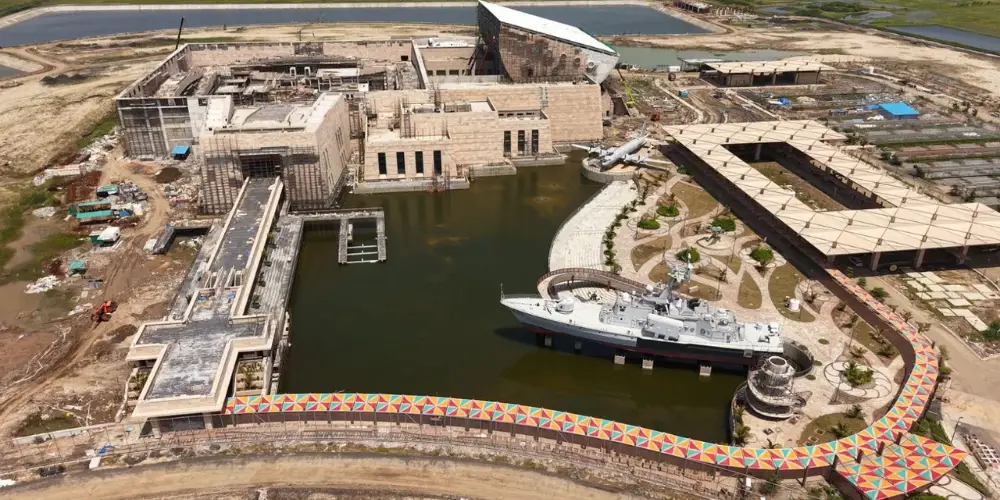
The National Maritime Heritage Complex is located near the Lothal archaeological site in Ahmedabad district, Gujarat. It’s roughly 80 km from Ahmedabad city, making it a comfortable day trip.
Since the complex is being developed in phases, opening timelines for different zones may vary. It’s a good idea to check official updates before planning your trip.
Quick Travel Tips
Best time to visit: October to March, when Gujarat’s weather is pleasant.
Getting there: Ahmedabad is the nearest major city with an international airport and rail hub. From there, road travel is the easiest option.
Combine your trip: Visit the original Lothal archaeological site and its museum nearby to see the real ruins that inspired the replica.
Carry essentials: Water, sunscreen, comfortable shoes, and a hat, as much of the experience is outdoors.
Plan for evenings: If evening programs are available, stay back to enjoy the illuminated pavilions.
7. The Bigger Picture: India’s Maritime Pride
The Lothal Heritage Zone is part of a larger vision to celebrate India’s seafaring history.
For centuries, Indian sailors traded spices, textiles, and ideas across oceans. Ports like Lothal, Muziris, Tamralipti, and Surat connected India to Africa, Arabia, and Southeast Asia.
Yet this legacy is often overlooked in popular history. Projects like the NMHC aim to change that by giving it the spotlight it deserves.
By blending archaeology, architecture, culture, and entertainment, the Lothal Heritage Zone makes history accessible and exciting. It invites everyone, from curious kids to seasoned travellers, to see India as a proud maritime nation.
At Angel Nova, we believe experiences like this are what make travel meaningful. They don’t just show you a place; they help you understand who we are and where we come from.
Frequently Asked Questions (FAQs)
It’s a section of the National Maritime Heritage Complex in Gujarat that recreates Harappan Lothal City and features Coastal States Pavilions.
Lothal is in Ahmedabad district, Gujarat, about 80 km from Ahmedabad city.
Yes. It is envisaged as a 1:1 scale recreation, including the Acropolis, Middle Town, Lower Town, Dockyard, and Warehouses.
They are state-sponsored pavilions showcasing the architecture, culture, food, boat building, and maritime heritage of India’s coastal states and UTs.






3 Comments
Boating at NMHC Lothal: A Voyage Through India's Maritime
October 07, 2026, at 3:58 pm[…] found evidence that ships once sailed into Lothal, loaded and unloaded goods, and connected this small settlement to distant lands. Beads, seals, and […]
Lothal Dockyard: World's First Man-Made Dockyard & NMHC Guide
October 07, 2026, at 4:07 pm[…] the Lothal dockyard is getting a new life. The Government of India is building the National Maritime Heritage Complex […]
Lothal 3D-Printed Bus Terminal: GSRTC Blends Heritage & Tech
October 10, 2026, at 5:29 pm[…] is changing. The National Maritime Heritage Complex (NMHC) is being built right beside the ancient site, and it is set to become a major tourist […]