

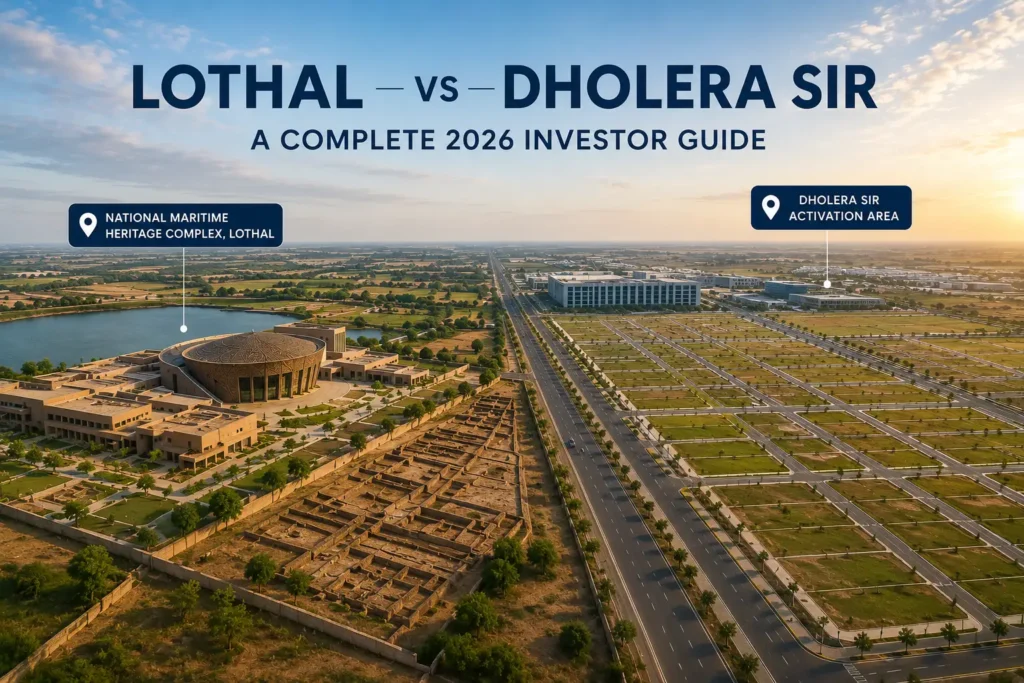
Most developers in Lothal sell land in Dholka taluka, Ahmedabad district — outside the Dholera SIR boundary. As of August 2026, plots near Lothal trade at roughly ₹2,500–₹9,000 per sq yard, against ₹11,000–₹15,000 inside Dholera’s TP1 and Activation Area. Lothal land is cheaper because it has no DSIRDA town planning scheme behind it.
INTRODUCTION
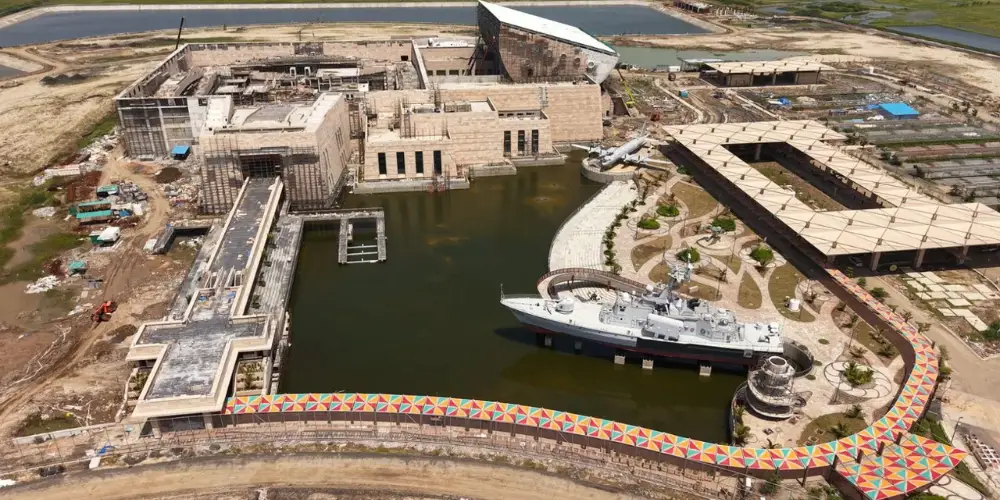
You searched for developers in Lothal because a broker sent you a plot map and a price that looked too good. Fair enough. But almost nobody explains the one fact that decides whether that plot appreciates or sits dead for a decade: Lothal is not inside Dholera SIR. That single line changes your approvals, your infrastructure timeline and your resale market. The ₹4,500 crore National Maritime Heritage Complex is real and it is being built. Whether the plot next to it is legally safe is a separate question. This article gives you 2026 price bands, the exact documents to demand, and a straight comparison between buying near Lothal and buying inside a DSIRDA TP scheme.
- Lothal sits in Dholka taluka, Ahmedabad district — outside the 920 sq km Dholera SIR boundary. Developers in Lothal therefore cannot show you a DSIRDA TP scheme number.
- The National Maritime Heritage Complex (NMHC) spans about 400 acres with a total outlay near ₹4,500 crore under the Sagarmala programme. Phase 1A was targeted for completion in July 2026.
- Plot rates near Lothal in 2026 sit at roughly ₹2,500–₹9,000 per sq yard. Inside Dholera SIR, TP1 and the Activation Area sit at ₹11,000–₹15,000 per sq yard.
- Lothal is about 6 km from Lothal–Bhurkhi railway station on the Ahmedabad–Bhavnagar line, and roughly 80 km by road from Ahmedabad.
- The three documents that matter more than any brochure: NA order, 7/12 and 8-A revenue extracts, and a Gujarat RERA registration number you can search yourself.
- No residential land exists inside the NMHC’s 400 acres. It is government-acquired. Anything sold as “NMHC plot” is adjacent land, not project land.
What do developers in Lothal actually sell?
Developers in Lothal almost always sell non-agricultural residential plots in villages around the archaeological site, not land inside any government project. Lothal is located near Saragwala village in Dholka taluka of Ahmedabad district. The 400-acre NMHC site itself is government-held under the Ministry of Ports, Shipping and Waterways, so no private developer has inventory inside it.
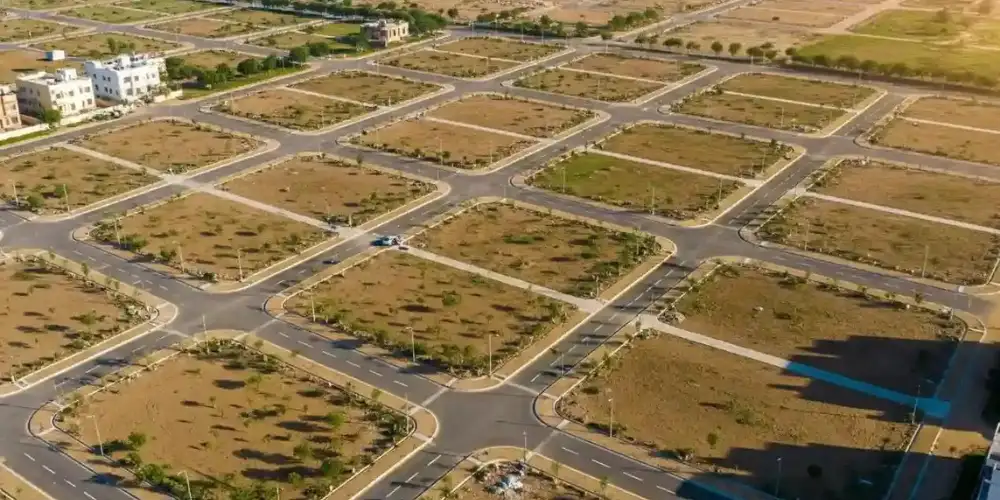
What is genuinely on sale is farmland converted to NA use in the surrounding revenue villages, subdivided into 100–300 sq yard plots, usually with a boundary wall, an entrance gate and an internal road. Some of it is clean. Some of it is still agricultural on paper with an NA application “in process” — a phrase that has no legal weight.
The second category you will meet is the Dholera developer using Lothal as a landmark. Their plot is inside Dholera SIR, 25–40 km away, and Lothal is simply the nearest famous name. Both can be legitimate. They are completely different investments. Ask one question and the fog clears: “Which TP scheme and which final plot number?” A genuine SIR plot has an answer. A Lothal plot does not, because there is no TP scheme there.
Is Lothal inside the Dholera SIR boundary?
No. Lothal falls in Dholka taluka of Ahmedabad district and sits outside the notified Dholera Special Investment Region, which covers roughly 920 sq km across 22 villages in Dhandhuka and Dholera talukas of Ahmedabad district.
This matters for four practical reasons:
- Planning authority. Inside SIR, DSIRDA prepares Town Planning schemes, fixes road widths and reserves land for utilities. Near Lothal, ordinary Gujarat revenue and district planning rules apply.
- Trunk infrastructure. Dholera’s underground water, sewerage, ICT ducting and 30–60 metre roads are being built inside the SIR. They stop at the boundary.
- Resale liquidity. The active investor market — NRIs, Gujarat and Delhi NCR buyers — searches for TP scheme plots. Outside-SIR land has a thinner buyer pool.
- Price ceiling. This is why the gap below exists and why it has persisted for years.
Sellers rarely lie about this outright. They simply say “near Dholera” and let you assume. Near is not inside.
| Location | Planning authority | Indicative rate (Aug 2026, ₹/sq yd) | Trunk infrastructure |
| Dholera SIR — Activation Area / TP1 | DSIRDA (TP scheme) | ₹12,000 – ₹15,000+ | Largely laid |
| Dholera SIR — TP2 | DSIRDA (TP scheme) | ₹11,000 – ₹14,000 | In progress |
| Dholera SIR — outer TP zones (TP3–TP6) | DSIRDA (TP scheme) | ₹5,500 – ₹8,000 | 5–10 year horizon |
| SIR periphery (just outside boundary) | District / revenue | ₹5,000 – ₹9,000 | Roads and power only |
| Lothal belt (Dholka taluka) | District / revenue | ₹2,500 – ₹9,000 | Village-grade |
Rates are market-observed ranges and move with plot size, road frontage and bulk-deal terms. Verify before you transact.
How does the NMHC project change land value near Lothal?
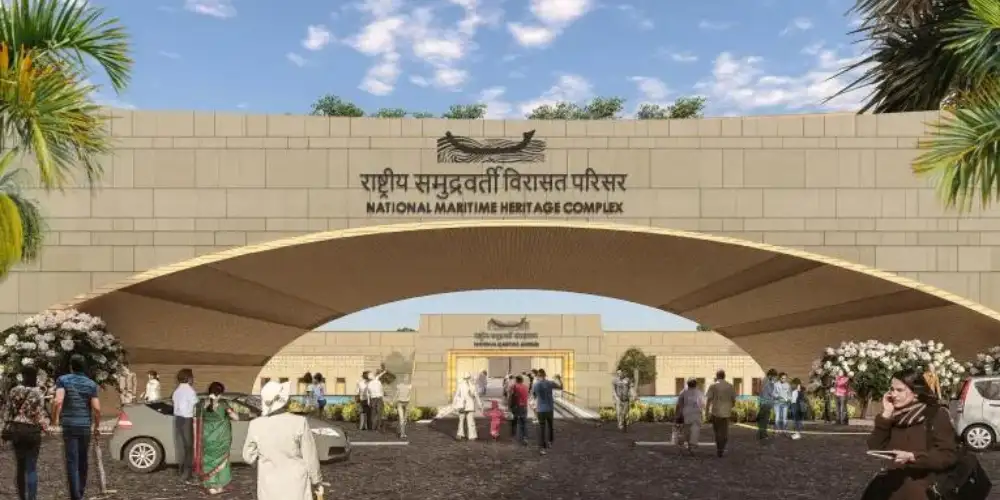
The NMHC is the strongest genuine demand driver Lothal has ever had — but it drives commercial and hospitality demand first, residential demand second.
The complex covers roughly 400 acres beside the ASI site, with a total project cost near ₹4,500 crore under Sagarmala. Phase 1A — the core museum galleries — was set for completion in July 2026. Phase 1B adds eight more galleries, a lighthouse museum, the Bageecha complex and a 50-dome theatre, at an additional outlay of about ₹3,000 crore. India has signed 10 international MoUs around the project, including with the Netherlands, Denmark, Germany, South Korea, the UAE and Oman.
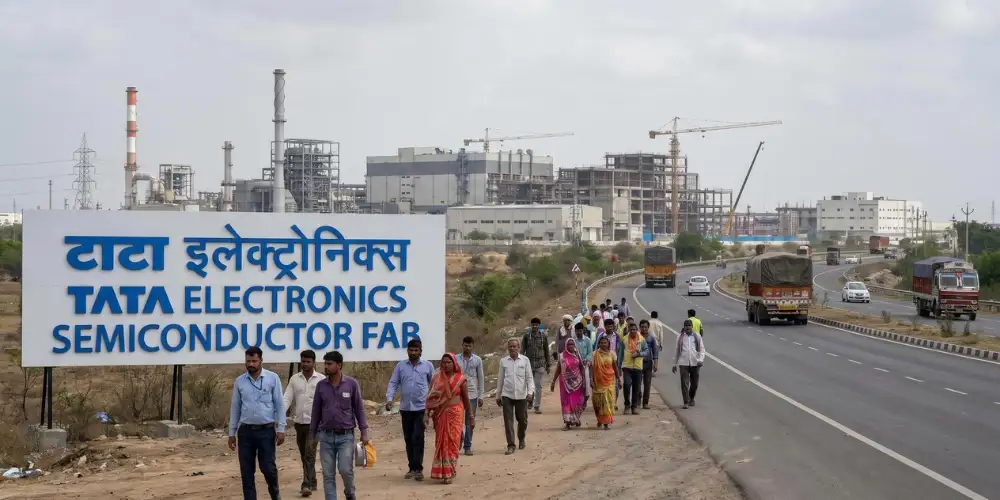
Translate that into land logic. A tourist museum creates need for hotels, restaurants, parking, retail and staff housing on approach roads. It does not create factory jobs, and it is factory jobs that build residential land value at scale. That is why Dholera’s Tata Electronics semiconductor plant has moved SIR rates far harder than NMHC has moved Lothal rates.
So: buy near Lothal for a tourism-linked commercial play. Do not buy it expecting semiconductor-grade residential appreciation.
| NMHC milestone | Scope | Status / target |
| Foundation stone | Project launch at Lothal | 2019 |
| Phase 1A | Core museum galleries | Target July 2026 |
| Phase 1B | 8 galleries, lighthouse museum, Bageecha complex, 50-dome theatre | Approx. ₹3,000 crore, subsequent phase |
| Later phases | Eco-resort, coastal state pavilions, theme park | Not publicly dated |
What documents should you check before booking with any developer in Lothal?
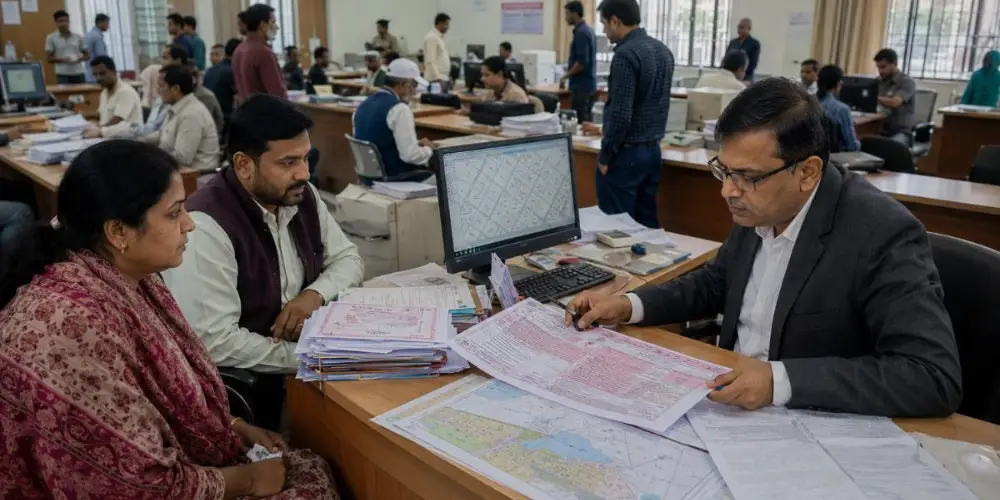
Ask for these seven, in writing, before you pay a booking amount. Any developer worth dealing with hands them over the same day.
- NA (non-agricultural) order — the actual collector’s order with number and date, not a receipt for an application.
- 7/12 (Village Form VII-XII) and 8-A extracts — current, showing the seller’s name and any charge on the land.
- Title clearance certificate from an advocate, ideally with a 30-year search report.
- Gujarat RERA registration number for the layout — then search it yourself on the Gujarat RERA portal. Do not accept a screenshot.
- Approved layout plan from the competent authority, with your plot number visible on it.
- Jantri (circle rate) reference for the survey number, so you can sanity-check the price and estimate stamp duty.
- Chain of ownership for at least the last two transactions.
If any single one of these seven is missing, the correct answer is no. Not “later”. No.
Should you buy near Lothal or inside a Dholera SIR TP scheme?
It depends on which risk you can live with.
Buy near Lothal if: your budget is under ₹10 lakh, you want a tourism-linked commercial or hospitality site, and you accept village-grade infrastructure with no fixed upgrade date.
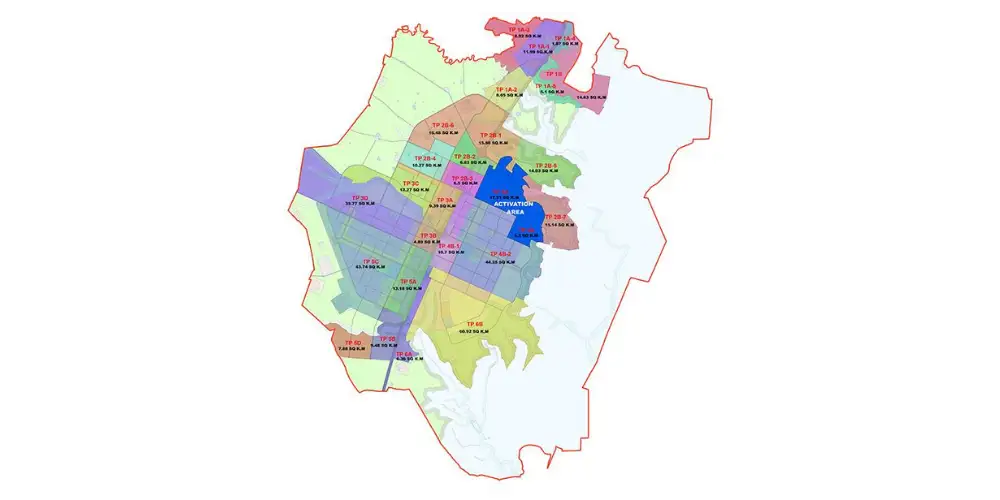
Buy inside Dholera SIR if: you want a plot with a TP scheme number, a final plot number, DSIRDA-planned road widths, and a resale market that already has active buyers. You pay 2–4x more per sq yard for exactly that.
Angel Nova Group builds only inside Dholera SIR. Founded in 2019, the group has delivered 800+ plots across 6 townships to 1,000+ investors across India, Singapore, the Middle East and Europe. That is a deliberate choice, not a limitation — every project sits inside a notified planning framework.
Replace these with the live PAA block from your own SERP pull before publishing. These six are the recurring questions in this query cluster.
Are there RERA-registered developers in Lothal?
Some layouts around Lothal carry Gujarat RERA registration and some do not. RERA registration is mandatory for projects above the prescribed plot and unit thresholds, but small subdivisions sometimes fall outside it. Always search the registration number directly on the Gujarat RERA portal rather than trusting a certificate image. No number means no statutory recourse if delivery goes wrong.
How far is Lothal from Dholera Smart City?
Lothal sits roughly 25–40 km from the main Dholera SIR development zones, depending on which TP scheme you measure to. It is about 6 km from Lothal–Bhurkhi railway station on the Ahmedabad–Bhavnagar line, and approximately 80 km by road from Ahmedabad. Published distances vary between sources — measure to your specific plot, not to “Dholera”.
Can I buy a plot inside the National Maritime Heritage Complex?
No. The roughly 400-acre NMHC site is government land, developed by the Ministry of Ports, Shipping and Waterways under Sagarmala. No private residential or commercial plots exist within it. Anything marketed as an “NMHC plot” is adjacent private land in a nearby revenue village. Ask for the survey number and confirm it on the 7/12 extract.
Is land near Lothal a good investment in 2026?
It is a reasonable low-ticket tourism play and a poor substitute for inside-SIR land. NMHC will lift demand for hotels, food and retail along approach roads. It will not deliver industrial employment. Entry is cheap at ₹2,500–₹9,000 per sq yard, but exit depends on a thin resale market. Treat it as an 8–12 year hold, not a 3-year flip.
Do developers in Lothal offer bank loans on plots?
Rarely, and only where the land is NA-converted, RERA-registered and inside an approved layout. Most banks avoid plot loans on land without approved layouts, and several restrict lending outside recognised planning authority limits. Many sellers offer their own instalment plans instead. An instalment plan is not financing — it carries no bank due diligence, so your verification burden goes up, not down.
Which is cheaper — Lothal or Dholera SIR?
Lothal, clearly. Land near Lothal starts around ₹2,500 per sq yard, while Dholera’s TP1 and Activation Area sit at ₹11,000–₹15,000. The 4–5x gap is the price of a DSIRDA town planning scheme, laid trunk infrastructure and a functioning resale market. Cheaper is not the same as better value.
RISKS AND OBJECTIONS
Nobody selling land will volunteer this list. Read it twice.
- NA conversion status. Agricultural land cannot be sold as residential plots until the collector issues an NA order. “Applied for NA” is not NA. Ask for the order number and date.
- Title and registry. Ancestral land in Gujarat villages often has multiple heirs. If every co-owner has not signed, your sale deed is challengeable years later. Insist on a 30-year title search.
- No DSIRDA layout approval near Lothal. Because Lothal is outside the SIR, DSIRDA does not approve layouts there. Any developer implying DSIRDA sanction on Lothal land is misrepresenting the position.
- RERA gaps. Smaller subdivisions can fall below RERA thresholds. Legal, but it removes your statutory complaint route.
- Inside vs outside the boundary. This is the single most common mis-sell in this market. Get the survey number, then confirm against the official SIR notification.
- Timelines vs marketing claims. NMHC Phase 1A was targeted for July 2026; later phases carry no public completion dates. Dholera’s airport and expressway have their own schedules. Assume slippage — large Indian infrastructure usually runs late, and your holding period should be built on that assumption, not on a brochure.
Being honest about this is the point. Land is a 10-year decision. A developer who hides the risk list is telling you something.
CONCLUSION
Three facts to carry away. First, Lothal sits in Dholka taluka, outside the 920 sq km Dholera SIR boundary — so developers in Lothal cannot offer a DSIRDA town planning scheme, and that single fact explains the entire price gap. Second, land near Lothal runs roughly ₹2,500–₹9,000 per sq yard in August 2026, against ₹11,000–₹15,000 in Dholera’s TP1 and Activation Area. Third, the ₹4,500 crore NMHC is genuine and progressing, with Phase 1A targeted for July 2026, but it drives tourism demand rather than industrial employment. Cheap land near a museum is a different investment from planned land near a semiconductor plant. Decide which one you actually want, then verify the NA order and the RERA number before you pay anything.
Want the August 2026 rate comparison in one page? Download the free Angel Nova price list and TP zone map — it shows Lothal-belt rates beside verified Dholera SIR TP scheme rates, so you can compare like for like.
Book a site visit: 9266337671 — we will show you both an inside-SIR plot and the Lothal belt on the same trip, so you can judge the difference yourself.
FAQ’s
Roughly ₹3–8 lakh for a 100–200 sq yard plot at ₹2,500–₹4,000 per sq yard, before costs. Add stamp duty, registration, legal verification and mutation charges — budget 8–10% on top. Inside Dholera SIR, the equivalent entry sits well above ₹12 lakh. Never budget only the plot price.
The sale deed is executed at the Sub-Registrar’s office covering that revenue village. You pay stamp duty and registration fees, both parties appear with ID and PAN, and the deed is registered the same day in most cases. Afterwards you apply for mutation so the 7/12 extract carries your name. Registration is not complete until mutation reflects it.
NRIs and OCI cardholders can buy residential and commercial property in India, but not agricultural land, plantation land or farmhouses. This makes NA conversion status decisive rather than optional. Payment must route through NRE, NRO or FCNR accounts. A registered power of attorney lets a trusted representative complete registry on your behalf.
Harder than inside Dholera SIR. The organised investor market concentrates on TP scheme plots with clear final plot numbers. Outside-SIR land sells mostly to local buyers and small investors, which means longer listing times and more price negotiation. Plan for a 6–12 month exit window, not weeks.
Roughly ₹12,000–₹15,000 per sq yard as of mid-2026, with some premium frontage and commercial parcels quoted higher. TP2 sits near ₹11,000–₹14,000, and outer TP schemes at ₹5,500–₹8,000. Rates depend on road width, plot size and distance to the expressway interchange.