
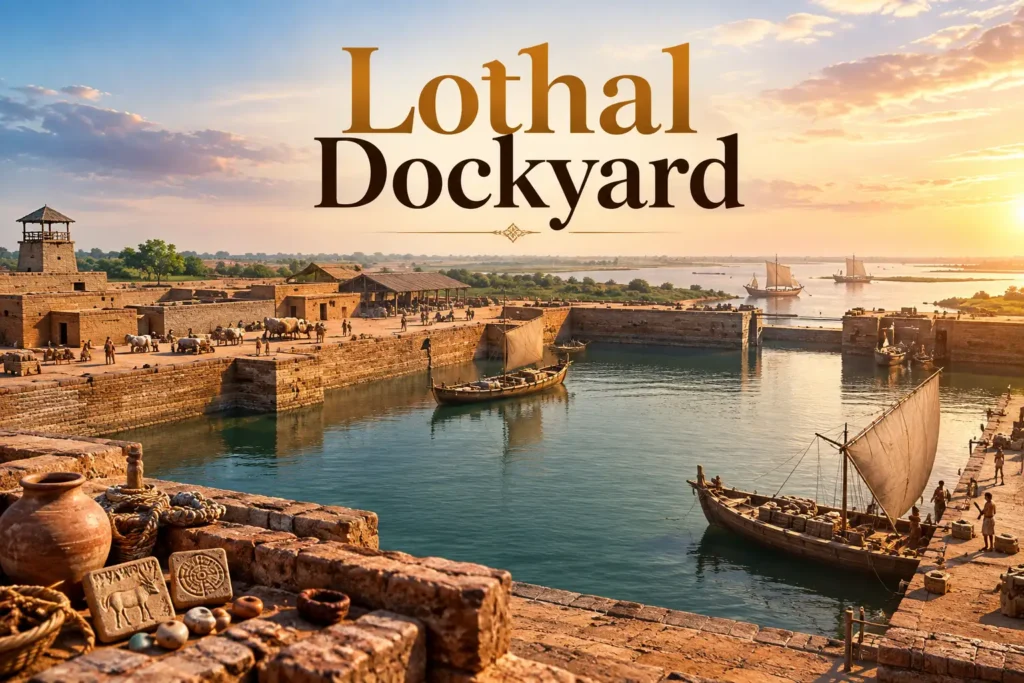
Long before modern ports and giant cargo ships, a small town in Gujarat was already sending boats across the sea. That town was Lothal. It is home to the oldest known man-made dockyard in the world.
Today, the Lothal dockyard is getting a new life. The Government of India is building the National Maritime Heritage Complex (NMHC) right next to it. At Angel Nova, we believe this is one of India’s most exciting heritage stories. Here is everything you need to know.
What Is the Lothal Dockyard?
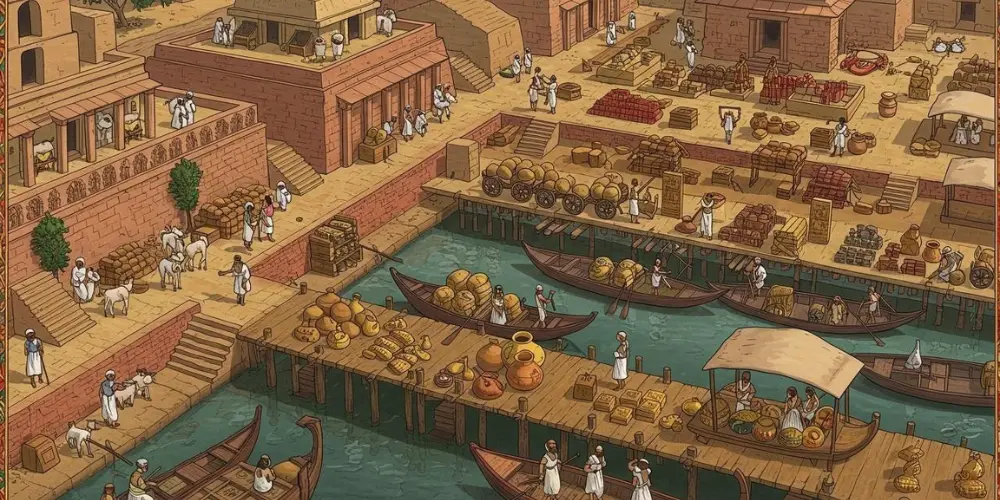
Lothal is an ancient site of the Indus Valley (Harappan) Civilisation. It sits in the Dholka Taluka of Gujarat, not far from Ahmedabad.
According to NMHC, the dockyard at Lothal dates back to around 2400 BC. That makes it more than 4,000 years old.
Archaeologists found a large brick basin that connected to an old river channel. Boats could sail in, load goods, and head back out toward the Gulf of Khambhat and beyond. It was a clear sign of smart planning and advanced engineering.
For its time, this was a remarkable achievement. Most civilisations were still learning basic farming, while the Harappans were building a working harbour.
Why Lothal Mattered to Ancient Trade
The Harappans were more than farmers and city builders. They were pioneer seafarers.
Lothal was a busy trade hub. Goods moved from here to faraway lands. The NMHC’s museum plans highlight trade links with the Persian Gulf, Oman, Mesopotamia, and Egypt.
Merchants likely traded beads, cotton, copper, and precious stones. In return, they brought back goods and ideas from other cultures.
Lothal was not alone. It was part of a larger network of port cities, including Dholavira and several settlements along the Makran coast. Together, they show that India had a strong maritime culture thousands of years ago.
Introducing the National Maritime Heritage Complex (NMHC)
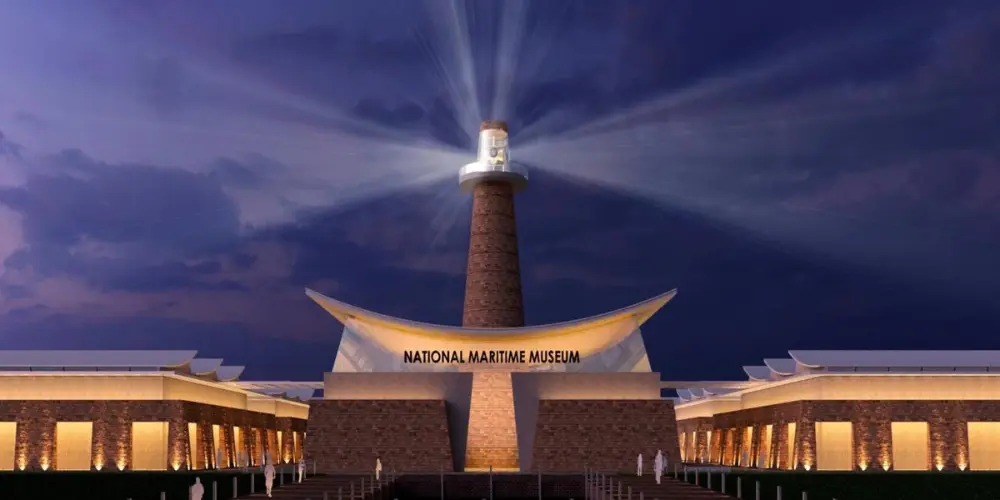
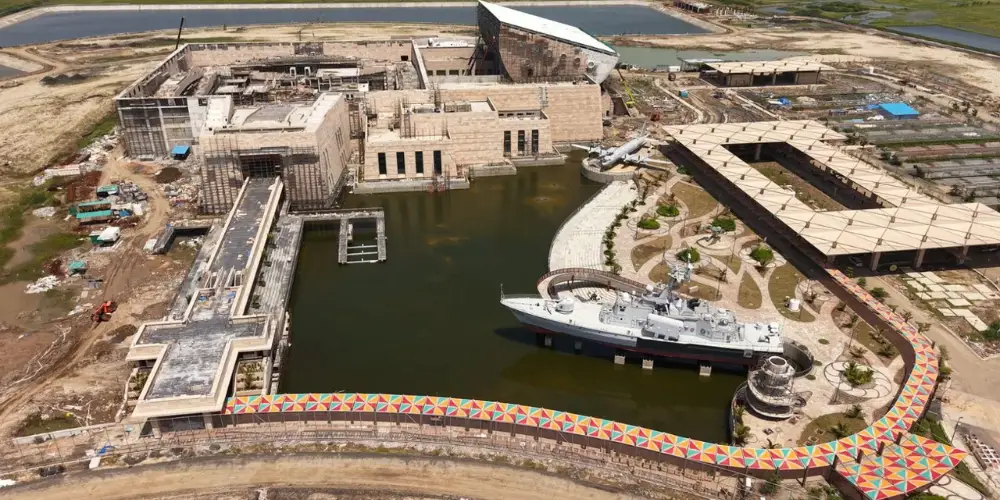
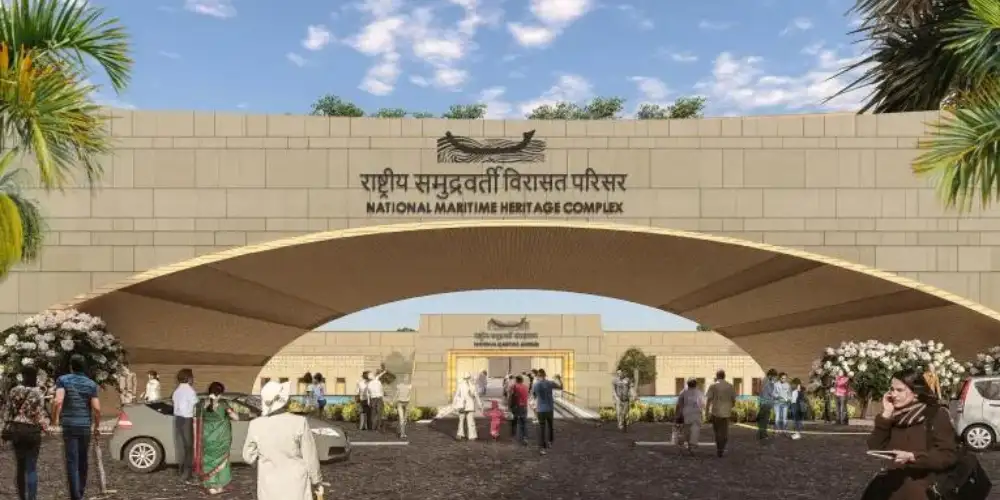
To honour this legacy, the Ministry of Ports, Shipping and Waterways is developing the National Maritime Heritage Complex at Lothal, near Saragwala village.
The aim is simple but grand. NMHC will tell the story of India’s maritime past, from ancient shipbuilding and navigation to naval history and coastal culture.
The project has drawn international interest too. NMHC lists collaboration with countries such as Portugal, Vietnam, the UAE, Thailand, Oman, South Korea, Italy, the Netherlands, Israel, Germany, and Denmark.
Prime Minister Narendra Modi also visited NMHC on 20 September 2025, which shows how important this project is at the national level.
Inside the National Maritime Museum
The heart of NMHC is the National Maritime Museum. It is planned to have 14 galleries in total. Galleries 1 to 6 form the first phase, while 7 to 14 are marked for future development.
Here is a quick look at the first six galleries:
Gallery 1 – Orientation and Oceanic Mythologies: A preview of all galleries, plus ocean science, underwater archaeology, and sea-related Indian mythology featuring deities like Varuna and Vishnu.
Gallery 2 – Harappans, the Pioneer Seafarers: The star gallery for history lovers. It focuses on Harappan life, trade, and port cities like Lothal, where the earliest man-made dockyard was excavated.
Gallery 3 – Post-Harappan Trajectories: How people moved after the Harappan decline, the spread of metal technology, and trade routes like Uttarapatha and Dakshinapatha.
Gallery 4 – India’s Contact with the Greco-Roman World: India’s ports on both coasts and their links with Rome, Greece, and the Persian Gulf.
Gallery 5 – Special Exhibitions: A space for rotating exhibitions with interactive touchscreens and hands-on activities.
Gallery 6 – Evolution of the Indian Navy and Coast Guard: Naval crafts, weapons, and stories of battles and peacetime service.
Lothal Town: Walk Through a Harappan Settlement
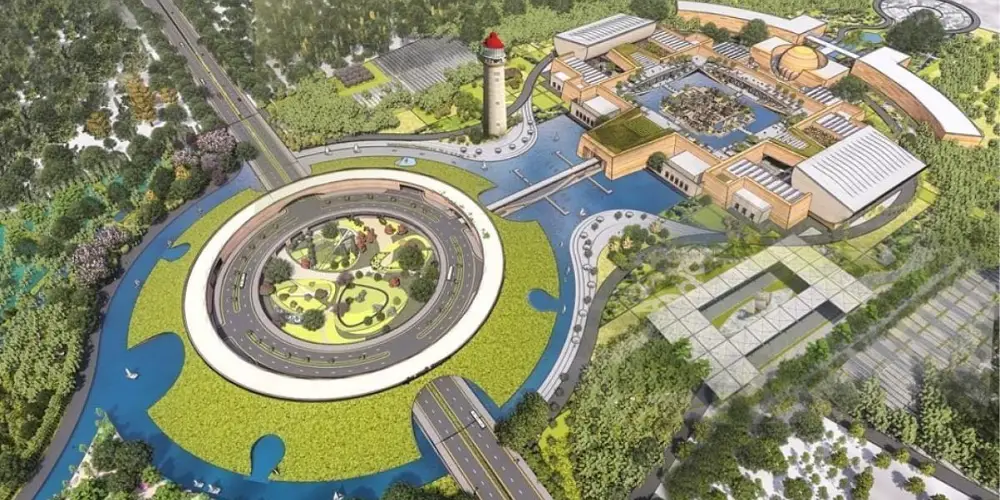
One of the most exciting features is Lothal Town. It is a recreated mini Harappan town inside the museum’s central courtyard.
A water body will surround it, giving the feel of the old Lothal dock. Visitors can walk through replicas of ancient houses, streets, and markets.
There will also be workshops, food stalls, and evening shows. The most fun part? A market where visitors can try bartering, just like people did before money existed.
This hands-on approach makes history feel alive, especially for kids and students.
Other Attractions at NMHC
NMHC is more than a museum. It is planned as a full heritage and leisure destination.
Naval Warship and Aircraft: Visitors can see the decommissioned warship INS Nishank, an IL-38 SD aircraft, and a Sea Harrier jet up close.
Boating: A relaxing way to enjoy the waterfront and feel connected to Lothal’s seafaring past.
Future Developments: The master plan includes a 5D dome auditorium, a lighthouse museum, and pavilions representing India’s coastal states.
There are also plans for themed hotels (called museotels), a maritime eco-resort, and several theme parks focused on naval history, monuments, adventure, climate change, and nature conservation.
When complete, NMHC could easily fill a full day, or even a weekend.
How to Reach the Lothal Dockyard and NMHC
Lothal is well connected by road, rail, and air.
From Ahmedabad: NMHC is about a 2-hour drive from Ahmedabad city, Ahmedabad Railway Station, and Ahmedabad International Airport.
From Delhi, Kolkata, Chennai, and Bengaluru: Take a direct train or flight to Ahmedabad, then drive to Lothal.
From Mumbai: Lothal is around 543 km away. You can take a train or flight to Vadodara, then drive about 124 km.
International travellers: Ahmedabad has flights to Dubai, Abu Dhabi, Sharjah, Kuwait, Bangkok, London, and New York.
Travel tip: NMHC is still being developed in phases, so some areas may not be open yet. Always check the official website, nmhc.in, for the latest opening status, timings, and ticket details before you go.
Why the Lothal Dockyard Should Be on Your Travel List
The Lothal dockyard is proof that India was a maritime power long before recorded history.
Standing at this site, you connect with engineers, sailors, and traders who lived over 4,000 years ago. With the NMHC adding museums, a recreated town, warships, and theme parks, the experience is only getting richer.
Whether you love history, travel with kids, or simply enjoy unique destinations, Lothal offers something special. Plan your trip with Angel Nova and discover where India’s sea story began.
Frequently Asked Questions (FAQs)
The Lothal dockyard in Gujarat, India, is considered the world’s oldest known man-made dockyard.
It dates back to around 2400 BC, making it more than 4,000 years old.
Lothal is in the Dholka Taluka of Gujarat, about a 2-hour drive from Ahmedabad.
The National Maritime Heritage Complex is a project by the Ministry of Ports, Shipping and Waterways to showcase India’s maritime history at Lothal.
The museum is planned to have 14 galleries, developed in phases.