

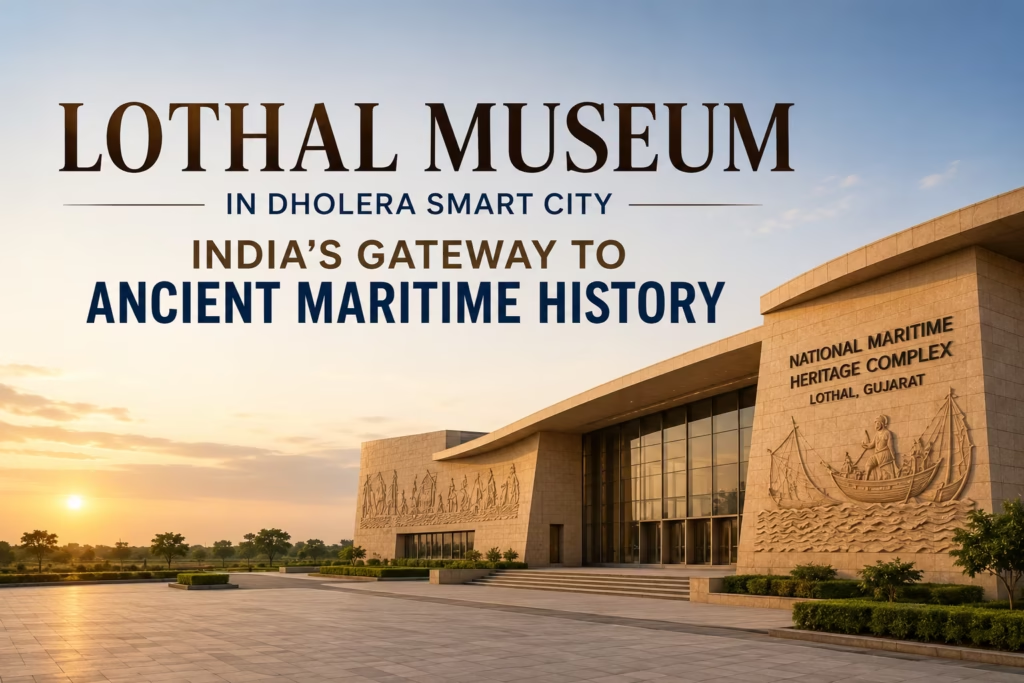
India is a land of rich civilization, culture, and historical achievements. Among the many historical treasures of the country, Lothal stands as one of the most remarkable archaeological discoveries of the Indus Valley Civilization. Located near Dholera Smart City in Gujarat, Lothal is now becoming a global attraction because of the upcoming National Maritime Heritage Complex (NMHC), also known as the Lothal Maritime Museum. This mega project is expected to become one of the world’s largest maritime heritage museums and tourism destinations.
Today, Dholera Smart City is already attracting investors, industries, and infrastructure projects. Along with modern development, the presence of the Lothal Museum adds historical and cultural importance to the region. The museum is not just a tourist attraction; it is a symbol of India’s 4,500-year-old maritime legacy and trade excellence.
What is Lothal?
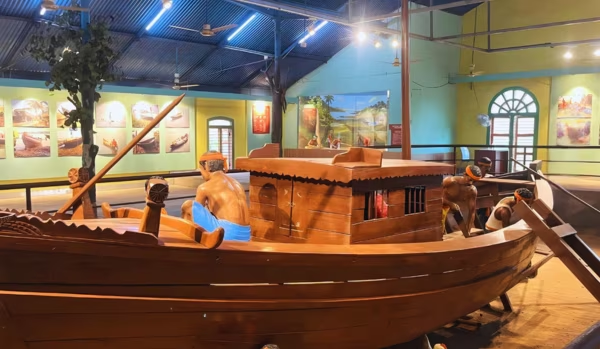
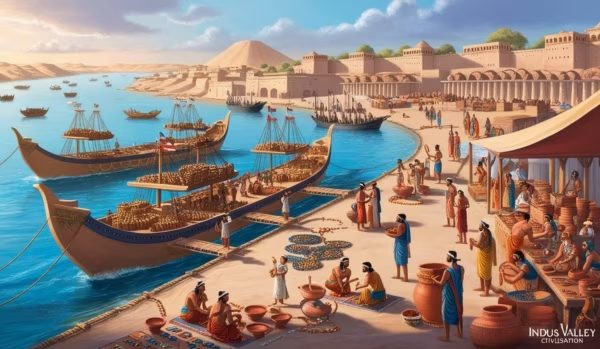
Lothal was one of the most important cities of the ancient Indus Valley Civilization. Archaeologists believe that the city was built around 2400 BCE and served as a major trading port connecting India with other civilizations like Mesopotamia and Egypt.
The word “Lothal” means “Mound of the Dead” in Gujarati. The site was discovered in 1954 by archaeologist S.R. Rao and later excavated by the Archaeological Survey of India.
One of the most important discoveries at Lothal was the world’s earliest known man-made dockyard. This dockyard proved that the people of the Indus Valley Civilization had advanced knowledge of maritime trade, engineering, drainage systems, and urban planning thousands of years ago.
The remains of warehouses, drainage systems, marketplaces, bead factories, and dock structures still amaze historians and tourists from around the world.
Lothal Museum and National Maritime Heritage Complex
To preserve and showcase India’s maritime heritage, the Government of India launched the National Maritime Heritage Complex (NMHC) project near Lothal in Gujarat. The project is being developed under the Sagarmala Programme by the Ministry of Ports, Shipping and Waterways.
The upcoming museum complex is spread across approximately 400 acres and is expected to become one of the largest maritime museums in the world.
The upcoming museum complex is spread across approximately 400 acres and is expected to become one of the largest maritime museums in the world.
The main aim of the project is to showcase India’s maritime journey from the Harappan era to modern times. The museum will educate visitors about:
- Ancient Indian trade routes
- Shipbuilding technologies
- Maritime culture and traditions
- Naval history
- Coastal civilizations
- Port development
- Indian Navy and Coast Guard heritage
- Maritime research and innovation
The project combines history, tourism, education, entertainment, and technology in one destination.
Why Lothal is Important for Dholera Smart City
Dholera Smart City is India’s first Greenfield Smart City developed under the Delhi-Mumbai Industrial Corridor (DMIC). The city is rapidly growing with world-class infrastructure, expressways, industrial zones, semiconductor projects, and airport development.
The Lothal Museum adds another major attraction near Dholera Smart City. This combination of modern infrastructure and ancient history creates a unique identity for the region.
The importance of the museum for Dholera includes:
1. Boost to Tourism
The Lothal Museum is expected to attract tourists from India and abroad. Visitors coming to explore the museum will also visit nearby attractions in Dholera Smart City. This will increase hotel demand, local businesses, transport services, and employment opportunities.

2. Economic Growth
Tourism generates direct and indirect employment. Restaurants, hotels, travel agencies, retail shops, and local businesses will benefit from the increasing number of visitors.
3. International Recognition
The National Maritime Heritage Complex will put Dholera and Gujarat on the global tourism map. It will showcase India’s ancient maritime strength to the world.
4. Infrastructure Development
To support tourism and visitor movement, the government is improving road connectivity, transport facilities, and public infrastructure around the region.
5. Real Estate Appreciation
Areas near tourism and infrastructure projects often witness growth in property demand. Due to the increasing importance of Dholera and Lothal, many investors are showing interest in nearby real estate developments.
Major Attractions of the Lothal Museum
The upcoming National Maritime Heritage Complex will feature several world-class attractions that combine history with modern technology.
1. Maritime Museum Galleries
The museum will include multiple galleries showcasing India’s maritime history from ancient civilizations to modern naval achievements. According to project details, the museum will contain galleries dedicated to Harappan maritime trade, oceanic mythology, shipbuilding, navigation systems, and naval evolution.
2. Recreated Lothal City
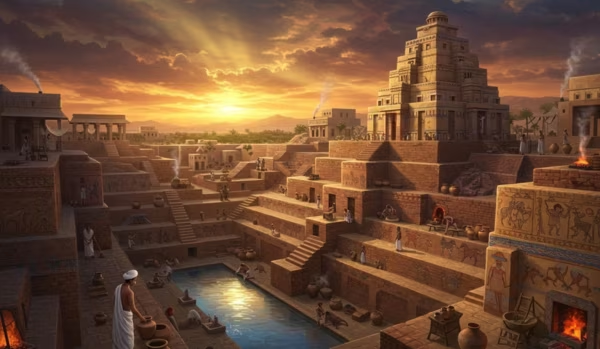
One of the most exciting attractions will be the recreation of the ancient Lothal city on a 1:1 scale. Visitors will be able to experience the ancient dockyard, houses, warehouses, marketplaces, and urban planning of the Harappan civilization.
3. Lighthouse Museum
The complex is expected to include one of the world’s tallest lighthouse museums, highlighting the importance of coastal navigation and maritime safety.
4. Naval and Coast Guard Gallery
The museum will feature exhibits dedicated to the Indian Navy and Coast Guard, showcasing their role in maritime security and national defense.
5. 5D Dome Theatre
Visitors will experience immersive storytelling through modern technology, visual effects, and educational presentations related to maritime history.
6. Theme Parks and Interactive Zones
The project also includes entertainment zones, gardens, educational centers, and experiential activities for children and families.
7. Research and Learning Centers
The complex aims to become a center for maritime education, research, and international collaboration.
Connectivity to Lothal and Dholera
The location of Lothal near Dholera Smart City provides excellent future connectivity.
Road Connectivity
The Ahmedabad-Dholera Expressway will significantly reduce travel time between Ahmedabad and Dholera. This expressway is expected to improve tourism and industrial movement in the region.

Airport Connectivity
The upcoming Dholera International Airport will further enhance domestic and international access to the museum and smart city.
Rail Connectivity
Future railway developments around Dholera and surrounding areas are expected to improve transportation for tourists and businesses.
Because of these infrastructure projects, Lothal Museum is likely to become one of Gujarat’s biggest tourist destinations in the coming years.
Historical Significance of Lothal
Lothal represents India’s advanced urban civilization and maritime excellence. Archaeological findings show that the people of Lothal had:
- Advanced drainage systems
- Planned roads and infrastructure
- Dockyards and water management
- Trade networks with foreign civilizations
- Bead-making industries
- Skilled craftsmanship
- Scientific town planning
The discovery of seals, ornaments, pottery, tools, and warehouses indicates that Lothal was once a prosperous trading hub.
Historians believe that ships from Lothal traveled to regions in the Middle East and Africa for trade purposes. This proves that India had strong global trade connections even thousands of years ago.
Future Potential of Lothal Region
The development of the National Maritime Heritage Complex is expected to transform the surrounding region into a major tourism and educational hub.
In the future, the area may witness:
- Growth in hospitality sector
- Increase in tourism-based businesses
- More infrastructure projects
- Higher employment opportunities
- International visitors and exhibitions
- Educational tours and cultural events
- Growth in real estate and commercial projects
The combination of Dholera Smart City, Dholera International Airport, expressways, semiconductor industries, and the Lothal Museum creates a strong growth ecosystem for Gujarat.
Why Investors are Watching Dholera and Lothal
Many investors believe that infrastructure and tourism projects increase long-term regional value. With the rise of Dholera Smart City and large government-backed developments, nearby areas are gaining attention.
The Lothal Museum strengthens the region by adding:
- Tourism value
- Cultural importance
- International visibility
- Government-backed development
- Better infrastructure demand
As tourism and industrial growth continue together, the Dholera region may emerge as one of Gujarat’s most important future growth corridors.
Conclusion
The Lothal Museum and National Maritime Heritage Complex represent a perfect blend of India’s glorious past and futuristic development. Located near Dholera Smart City, this world-class project will showcase India’s ancient maritime achievements while creating new opportunities in tourism, education, infrastructure, and economic growth.
Lothal is not just an archaeological site; it is proof that India was once a global center of trade, engineering, and maritime excellence. The upcoming museum complex will help preserve this heritage for future generations while attracting tourists, researchers, historians, and investors from around the world.
With the rapid growth of Dholera Smart City, the development of the Lothal Museum is expected to become one of the biggest highlights of Gujarat’s future. From ancient dockyards to modern smart city infrastructure, this region beautifully connects India’s history with its vision for tomorrow.
Dholera ke latest updates, new launches, price revisions, site visit schedules aur upcoming expo announcements sabse pehle paane ke liye:

Frequently Asked Questions (FAQ)
1. What is the Lothal Museum?
The Lothal Museum is part of the upcoming National Maritime Heritage Complex (NMHC) near Dholera Smart City in Gujarat. It is being developed to showcase India’s ancient maritime history, trade routes, shipbuilding technologies, and naval heritage.
2. Where is Lothal located?
Lothal is located in Gujarat near Dholera Smart City, approximately 80–90 km from Ahmedabad. It is one of the most important archaeological sites of the Indus Valley Civilization.
3. Why is Lothal famous?
Lothal is famous for having one of the world’s oldest known dockyards from the Indus Valley Civilization. It was an important trading port around 2400 BCE and had advanced urban planning and drainage systems.
4. What is the National Maritime Heritage Complex?
The National Maritime Heritage Complex is a large museum and tourism project being developed near Lothal to preserve and showcase India’s maritime history from ancient to modern times.
5. How is Lothal connected to Dholera Smart City?
Lothal is located close to Dholera Smart City, making it an important tourism and cultural attraction for the region. The project is expected to boost tourism, infrastructure, and economic growth around Dholera.




1 Comment
Bulk Land in Lothal 2026: Acre Rates, Laws and Buyer Guide
September 02, 2026, at 12:35 pm[…] us the survey numbers of any Lothal parcel you are evaluating. We will tell you the tenure class, ceiling exposure and ASI position before you […]