

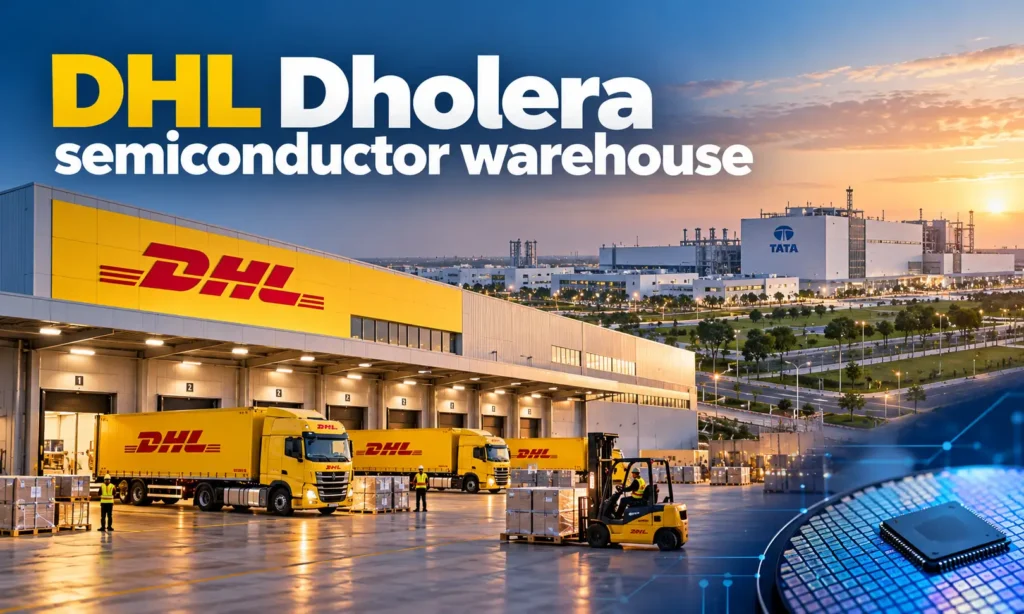
Dholera has just received another strong vote of confidence. DHL Group, one of the world’s largest logistics companies, plans to invest around ₹50 crore in a dedicated semiconductor logistics facility in Dholera, Gujarat.
The warehouse will come up close to the Tata Electronics chip fabrication plant. Operations are expected to begin by August 2027.
For anyone tracking Dholera’s growth story, this is big news. At Angel Nova Group, we break down what this investment means for the region, for industry, and for long-term investors.
The Big News at a Glance
Here are the key facts behind the announcement:
- Company: DHL Group
- Location: Dholera, Gujarat
- Investment: Approximately ₹50 crore
- Purpose: India’s first dedicated semiconductor warehouse
- Operations start: August 2027
- Nearby anchor project: Tata Electronics chip fab
The facility will be DHL’s first-ever dedicated semiconductor logistics hub in India. It is designed to handle the specialised storage and movement needs of the chip industry.
The ₹50 crore figure is reported as an initial investment. DHL may expand its commitment as the semiconductor ecosystem in Dholera matures.
Why a Semiconductor Warehouse Is Special

A semiconductor warehouse is not an ordinary godown. Chips, wafers and the materials used to make them are extremely sensitive.
They need controlled temperature and humidity. Many items must be protected from dust, static electricity and vibration. Some chemicals and gases used in chip production require strict safety handling.
Timing also matters. A chip fab runs around the clock. Even a short delay in raw material supply can disrupt production worth crores.
That is why fabs need logistics partners located right next door. A specialised warehouse near the plant reduces transit time, lowers risk and keeps supply chains steady.
DHL is expected to draw on its experience from established semiconductor hubs such as Taiwan and Malaysia. Bringing that know-how to India is a meaningful step for the country’s chip ambitions.
Why DHL Chose Dholera
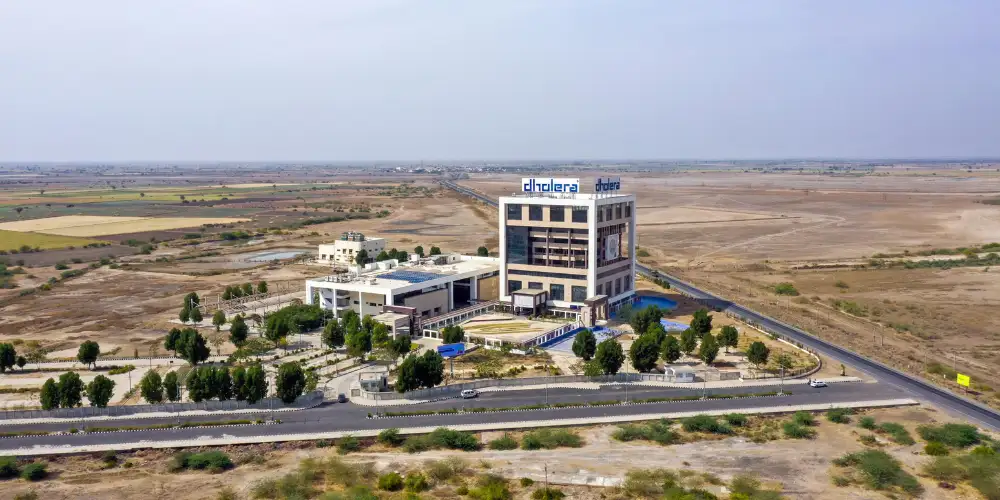
The answer lies in one word: Tata.
Tata Electronics is building India’s first commercial semiconductor fabrication plant in the Dholera Special Investment Region (SIR). The project carries a total investment of over ₹91,000 crore.
The fab is being developed with technology support from Taiwan’s Powerchip Semiconductor Manufacturing Corporation (PSMC). It is planned to have a capacity of around 50,000 wafer starts per month.
The Government of India, through the India Semiconductor Mission, has committed 50% fiscal support for eligible project costs. The project is expected to create over 20,000 direct and indirect skilled jobs.
Tata Electronics has also said the Dholera fab will be supported by roughly 450 suppliers. To house them, the company is developing a 363-acre vendor park near the facility.
When an anchor project of this size arrives, support industries follow. Logistics is one of the very first. DHL’s move shows that global players see Dholera as a serious, long-term manufacturing destination.
Part of DHL’s Bigger India Plan
This warehouse is not a standalone bet. It is part of DHL Group’s broader €1 billion (about ₹10,700 crore) investment commitment for India, announced in November 2025.
That larger plan reflects DHL’s belief in India’s rise as a global manufacturing and trade hub. Choosing Dholera for its first dedicated semiconductor facility shows exactly where the company sees future demand.
For the region, this matters. When a multinational logistics leader commits capital, it often attracts more investors, suppliers and service providers.
What This Means for Dholera’s Growth

Dholera is one of India’s most ambitious planned cities. The Special Investment Region spans about 929 square kilometres, larger than Singapore.
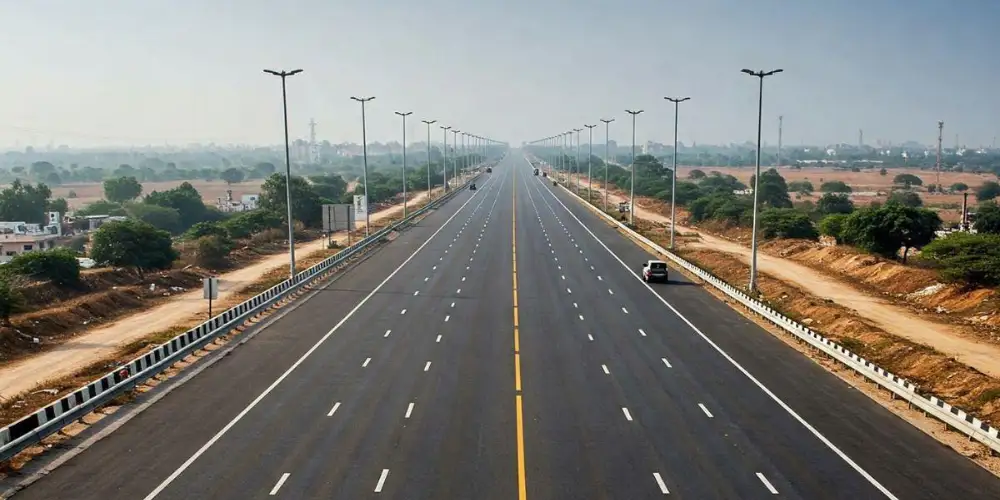
The city is planned around non-polluting industries, wide roads, smart utilities and modern urban infrastructure. Key projects such as the Ahmedabad–Dholera Expressway and the Dholera International Airport are improving connectivity.
DHL’s investment adds a crucial piece to this puzzle. Here is why it matters:
1. Stronger industrial ecosystem A dedicated logistics hub makes Dholera more attractive for chip suppliers, equipment makers and electronics companies.
2. More jobs Warehousing, transport, handling and technical roles will create fresh employment in and around Dholera.
3. Demand for housing and services New workers, engineers and managers will need homes, schools, hospitals and retail. This drives demand for residential and commercial development.
4. Global credibility When names like Tata and DHL invest side by side, Dholera’s profile rises on the global investment map.
5. Cluster effect Semiconductor regions worldwide grow as clusters. One fab attracts suppliers, who attract logistics, who attract even more businesses. Dholera appears to be at the start of that cycle.
What It Means for Investors
For investors, infrastructure and industry announcements are among the strongest signals of a region’s future.
Dholera’s story is shifting from “planned city” to “working industrial hub.” Projects like the Tata fab and now the DHL warehouse show real capital flowing into the ground.
Historically, land and property demand tend to rise around major industrial and employment centres. As factories, warehouses and offices take shape, so does the need for housing, retail and hospitality.
That said, every investment carries risk. Timelines can shift, and market conditions change. Smart investors look at verified titles, government approvals, location within the master plan, and access to key infrastructure.
At Angel Nova Group, we believe in helping clients make informed, research-backed decisions. Our team keeps track of developments in Dholera so you can evaluate opportunities with clarity rather than hype.
The Road Ahead: 2027 and Beyond
2027 is shaping up to be a landmark year for Dholera. The Tata Electronics fab is targeted to begin production around that time, and DHL’s warehouse is expected to be operational by August 2027.
As these projects go live, Dholera could see a wave of follow-on investment. Chip suppliers, chemical and gas providers, equipment service companies and electronics manufacturers may all look to set up nearby.
Supporting infrastructure, from roads and power to water and housing, will need to keep pace. Gujarat’s track record of industrial development gives reason for optimism.
India’s semiconductor journey is still young. But with anchor projects, government support and global partners like DHL, Dholera is emerging as one of the key places where that journey is being built.
Conclusion
DHL’s ₹50 crore investment in Dholera may look modest next to Tata’s ₹91,000 crore fab. But its importance goes beyond the number.
It signals that the semiconductor ecosystem is forming around Dholera, not just a single plant. Logistics is the backbone of any manufacturing hub, and DHL is laying that backbone early.
For businesses, workers and investors, Dholera is becoming harder to ignore. Stay connected with Angel Nova Group for the latest updates and expert guidance on Dholera’s growth.
Frequently Asked Questions (FAQs)
DHL Group plans an initial investment of about ₹50 crore in a dedicated semiconductor warehouse in Dholera, Gujarat.
The facility is expected to become operational by August 2027.
It will be close to the Tata Electronics semiconductor fab, India’s first commercial chip fabrication plant, which needs specialised logistics support.
It is reported to be DHL’s first dedicated semiconductor warehouse in India and is being described as India’s first dedicated facility of its kind.
Tata Electronics’ Dholera fab involves an investment of over ₹91,000 crore and is expected to create more than 20,000 direct and indirect jobs.