
Around 4,500 years ago, Lothal was one of the busiest trading ports of the Indus Valley Civilization. Boats docked here, traders bargained, and goods moved across the region.
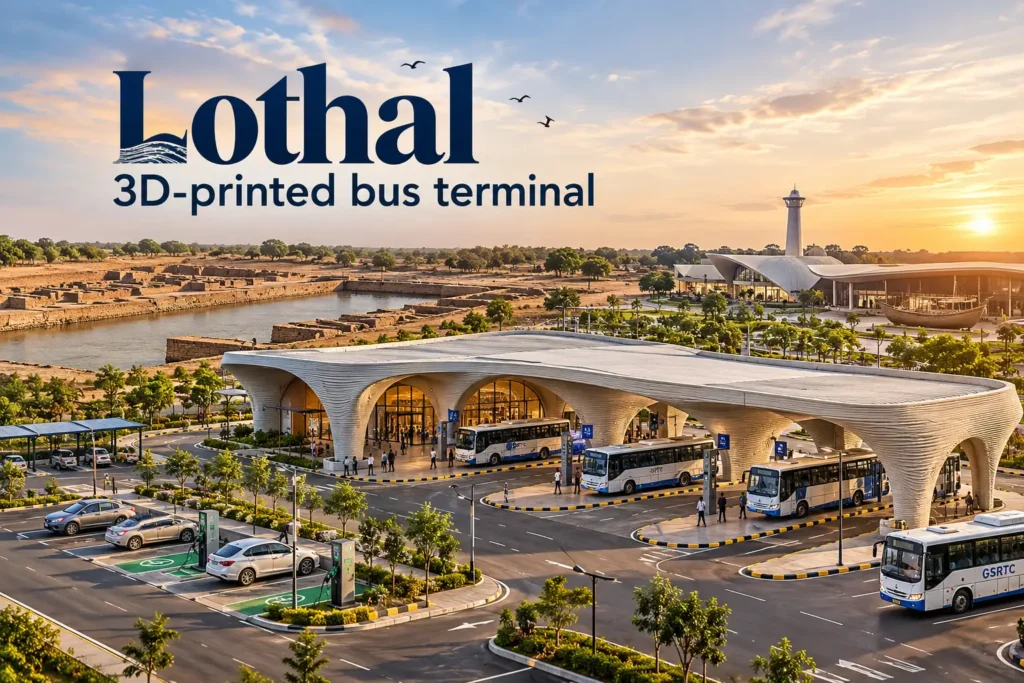
Today, the same land is getting ready for a very different kind of traffic. The Gujarat State Road Transport Corporation (GSRTC) plans to build a new bus terminal at Lothal using 3D concrete printing.
This project brings together one of India’s oldest planned towns and one of its newest construction methods. Here is a simple look at what the Lothal 3D-printed bus terminal will offer and why it matters.
Why Lothal Needs a Proper Bus Terminal
Lothal lies in Dholka taluka of Ahmedabad district. For decades, most of its visitors were history lovers, students and archaeology researchers.
That is changing. The National Maritime Heritage Complex (NMHC) is being built right beside the ancient site, and it is set to become a major tourist draw.
More visitors will need dependable public transport. A dedicated terminal will give tourists, local residents and NMHC staff a safe, organised place to board and wait for buses.
The Project at a Glance
| Detail | What We Know |
| Developer | Gujarat State Road Transport Corporation (GSRTC) |
| Location | Lothal, Dholka taluka, near the NMHC |
| Plot size | Nearly 5,000 sq m |
| Built-up area | Around 750 sq m |
| Bus bays | 5 |
| Construction method | 3D concrete printing |
| Completion deadline | 9 months from the work order |
| Tender opened | September 24, 2026 |
| Bids close | October 21, 2026 |
What Is 3D Concrete Printing?
In 3D concrete printing, a large robotic printer builds walls one layer at a time. It follows a digital design, much like a desktop 3D printer, but on a much larger scale.
This method can cut construction time, reduce material waste and need fewer workers on site. It also makes curved and custom shapes easier to build.
India has already tried the idea on public buildings, such as the 3D-printed post office in Bengaluru. A bus terminal at a heritage site takes the concept a step further.
Facilities Travellers Can Expect
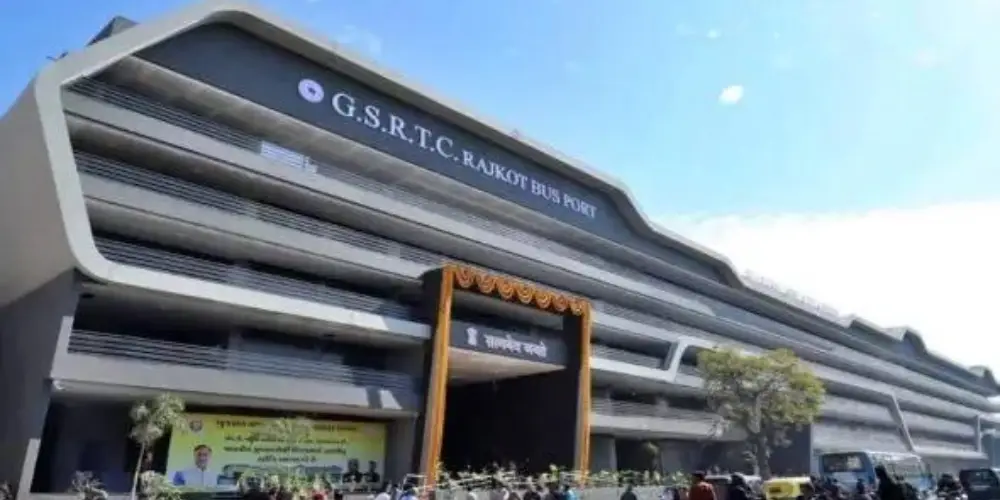
The terminal building will have passenger waiting areas and ticket and inquiry counters. There will also be space for shops or a canteen.
Staff will get their own rooms. Parents travelling with infants will find a baby-feeding room with an attached toilet, which many bus stations still lack.
Outside, the campus will have public toilets, drinking water, vehicle parking and dedicated areas for buses to move around.
How the Site Is Planned
The conceptual layout shows a site of roughly 67 m by 75 m facing the main road, with separate entry and exit points. The site is divided into these zones:
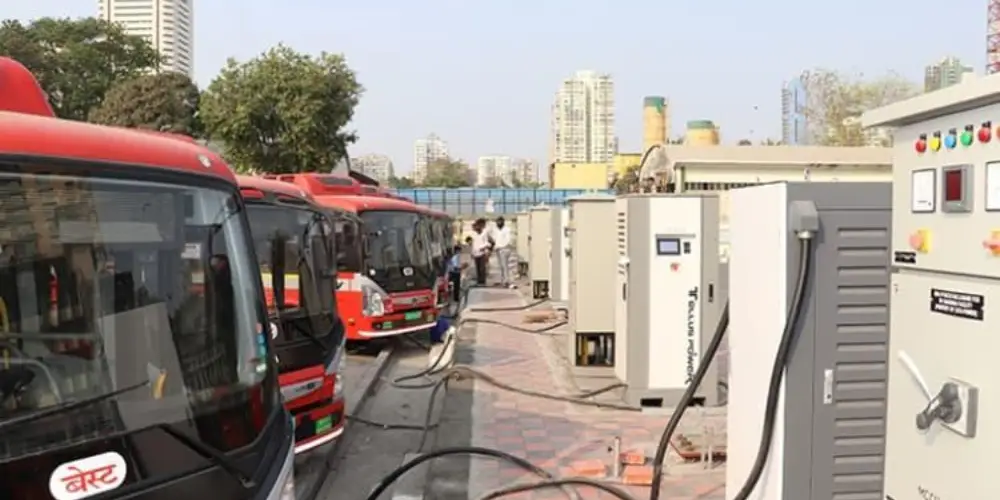
- Zone A: Car parking with EV charging
- Zone B: Pick-up and drop-off area
- Zone C: The main terminal building
- Zone D: Utility block
- Zone E: Fuel and service station
- Zone F: Idle bus parking
- Zone G: Open circulation space for buses
- P1 to P5: Five angled boarding platforms
This zoning keeps private vehicles, passengers and buses apart. That should mean smoother movement and fewer bottlenecks during peak tourist hours.
Green Features Built In
Sustainability is part of the plan from the start. A 50 kW rooftop solar system will help power the building.
Rainwater harvesting will help save water in this dry region. The EV charging zone also means the terminal will be ready for cleaner vehicles.
The plan also includes fire-safety infrastructure to keep daily crowds safe.
Building Beside a 4,500-Year-Old Site
Building near Lothal comes with extra rules. The contractor must follow all applicable archaeological regulations that protect the site.
The contract covers every stage of the work. That includes pre-construction activities, detailed design and planning, actual construction, and project monitoring through to handover.
What This Means for Gujarat Tourism
The new terminal could make Lothal much easier to reach for day-trippers from Ahmedabad and beyond. Easier access often brings more visitors, local jobs and growth for small businesses.
It also shows that Gujarat is choosing to present its ancient past with modern, eco-friendly infrastructure.
If the nine-month timeline holds, visitors may soon step off a bus at a 3D-printed terminal and walk into a story that began thousands of years ago.
Frequently Asked Questions
It is a new GSRTC bus station planned at Lothal, to be built using 3D concrete printing.
On a plot of nearly 5,000 sq m in Dholka taluka, close to the National Maritime Heritage Complex.
The terminal will have five bus bays, plus separate space for idle bus parking.
Waiting areas, ticket and inquiry counters, a canteen or shops, toilets, drinking water, parking and a baby-feeding room.
Yes. It includes a 50 kW rooftop solar system, rainwater harvesting and an EV charging zone.