

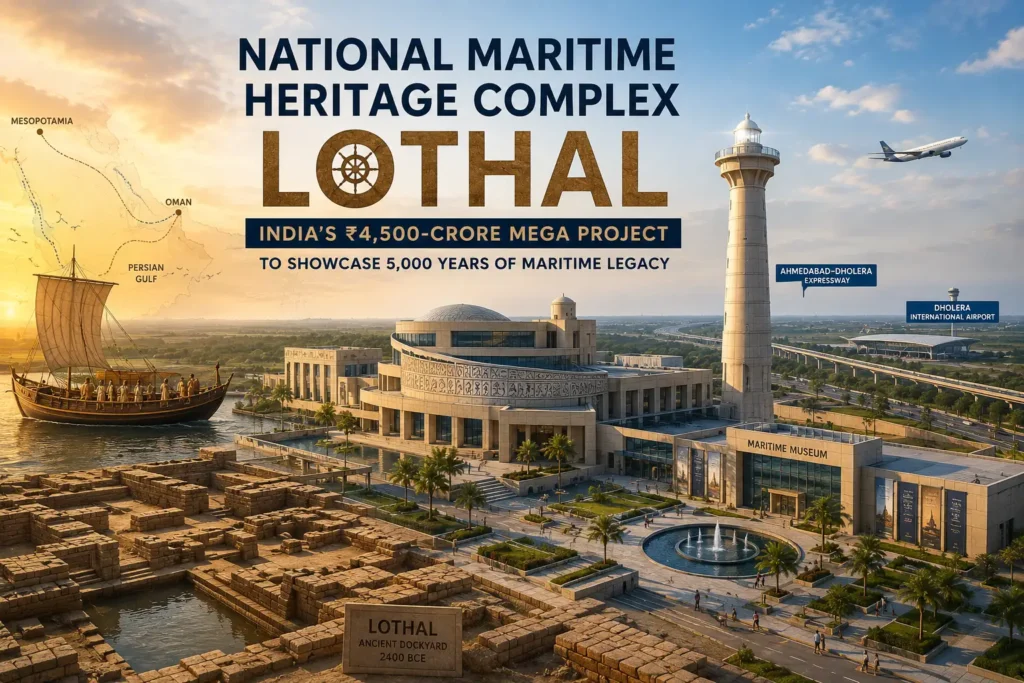
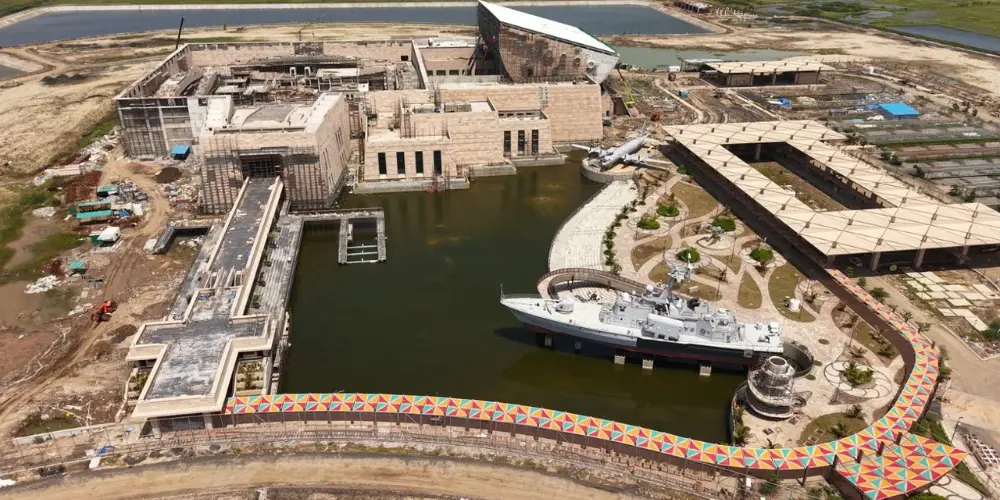
India is building one of the most ambitious cultural and tourism projects in its history — the National Maritime Heritage Complex Lothal, a ₹4,500-crore development near Ahmedabad in Gujarat. Spread over roughly 400 acres beside a 5,000-year-old Harappan port town, the project is designed to tell the story of India’s relationship with the sea, from Indus Valley trading ships to modern ports and naval power.
For investors, there is a second story here. Lothal sits within easy reach of Dholera Special Investment Region (SIR), India’s first greenfield smart city. A world-class heritage destination rising next door adds a powerful new layer to an already fast-moving Dholera investment landscape.
1. Lothal: The 5,000-Year-Old Port Town Behind the Project
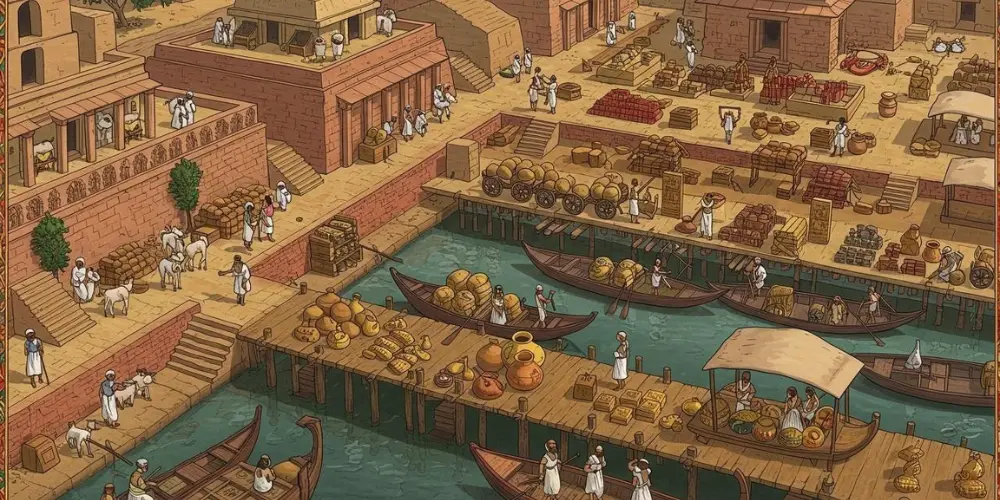
The choice of location is not accidental. Lothal, in Gujarat’s Ahmedabad district, was part of the Indus Valley (Harappan) Civilization and functioned as a busy port city around 2400 BCE.
- Excavations uncovered one of the world’s earliest known dockyards
- Warehouses, advanced drainage systems and planned streets point to sophisticated urban design
- Bead-making workshops, metallurgy and pottery formed a thriving industrial base
- Trade links extended to Oman, Mesopotamia and the Persian Gulf
| Feature | Details |
| Civilization | Indus Valley (Harappan) |
| Estimated Age | Around 5,000 years |
| Location | Near Ahmedabad, Gujarat |
| Key Discovery | Among the world’s earliest dockyards |
| Trade Links | Oman, Mesopotamia, Persian Gulf |
| Major Industries | Bead-making, metallurgy, pottery |
The dockyard alone suggests that the people here understood shipbuilding, tidal movements and navigation long before most of the world did. Maritime trade, in other words, shaped India’s economy from the very beginning.
2. Inside the ₹4,500-Crore National Maritime Heritage Complex
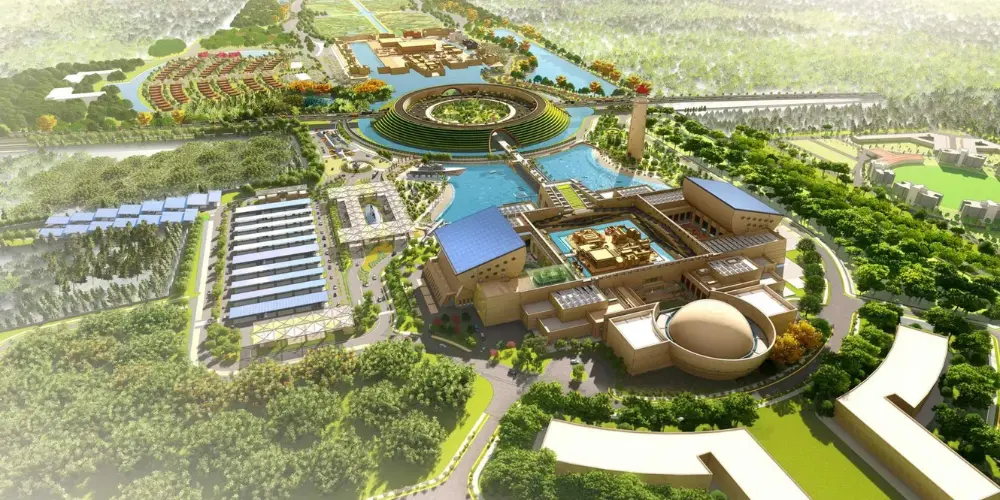
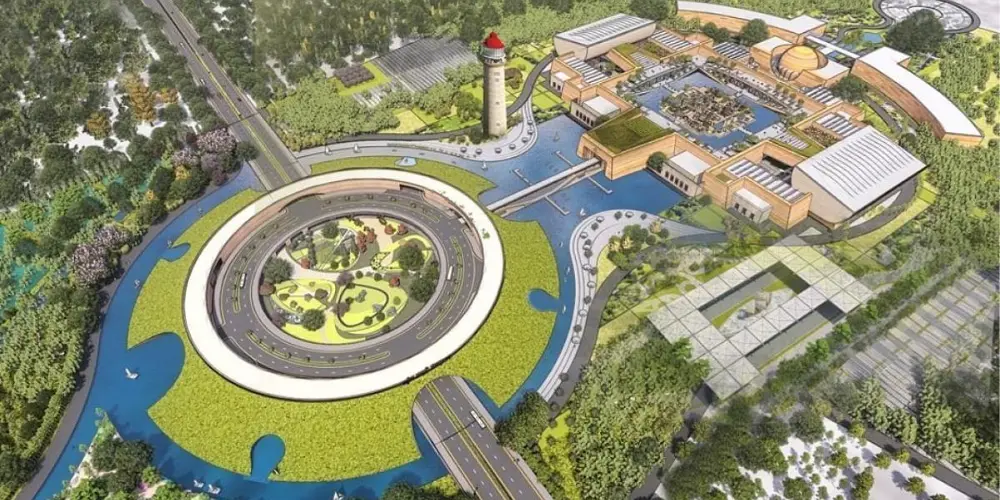
The project is being developed by the Ministry of Ports, Shipping and Waterways, Government of India, on land adjoining the protected archaeological site.
- Estimated investment: around ₹4,500 crore, phased across multiple stages
- Total area: approximately 400 acres
- Positioning: a national-scale cultural landmark rather than a conventional museum
- Scope: heritage conservation, tourism, education and research under one roof
The design brief is deliberately broad. Instead of displaying artefacts behind glass, the complex is meant to place visitors inside the story — walking through recreated streets, boarding recreated vessels and watching trade routes come alive through digital storytelling.
3. What Visitors Will Experience at Lothal
Once complete, the complex is expected to be one of the most immersive heritage destinations in Asia. Planned attractions include:
- A technologically advanced maritime museum with immersive and interactive galleries
- A replica Harappan city, recreating streets, homes and workshops of the ancient port
- The world’s tallest lighthouse museum, planned as the project’s signature landmark
- Themed heritage parks covering different eras of Indian maritime history
- Coastal state pavilions showcasing traditions from India’s maritime states
- Research, learning and conservation facilities for students and scholars
For families, students and international tourists, this creates a full-day destination — the kind of anchor attraction that changes visitor patterns across an entire region.
4. The Vision: Heritage, Education and Technology Together
The concept grew out of a wider effort to bring India’s maritime past back into public awareness while supporting cultural tourism and academic research.
Professor Vasant Shinde, a well-known archaeologist and an advisor to the project, has described the complex as an engineering and cultural marvel that will redefine how maritime history is presented globally. The goal, he has explained, is an immersive journey that carries visitors from ancient times to the modern era.
Key objectives include:
- Preserving and interpreting the archaeological legacy of the site
- Creating a national centre for maritime research and education
- Generating tourism-led employment across hospitality, transport and retail
- Strengthening Gujarat’s position on the global heritage tourism map
5. Lothal and Dholera: Two Landmarks on One Growth Corridor
Here is where infrastructure and heritage meet. Lothal lies close to Dholera SIR, and both fall within the same emerging development corridor south of Ahmedabad.
- Dholera SIR is India’s first planned greenfield smart city, spread across a large industrial and residential master plan
- The Ahmedabad–Dholera Expressway dramatically cuts travel time from the city
- Dholera International Airport is taking shape as a major regional gateway
- Semiconductor, solar and manufacturing investments have already been committed to the region
- The heritage complex adds a tourism dimension to what was largely an industrial story
That combination is unusual. Most greenfield cities grow on industry alone. Dholera now has industry, aviation, expressway connectivity and a national cultural landmark within the same catchment — a mix that historically supports faster, more durable land appreciation.
6. Why Dholera Investment Looks Stronger with Lothal Nearby
A large heritage destination creates demand that spills well beyond its boundary wall. For anyone evaluating a Dholera investment, the practical effects are worth understanding:
- Visitor footfall drives service demand — hotels, restaurants, retail and transport operators need space and staff
- Hospitality and commercial plots gain relevance as tourist volumes rise
- Infrastructure gets prioritised — roads, utilities and public transport improve faster along tourist routes
- Employment expands in construction first, then in long-term service roles
- Regional visibility increases, attracting national and international attention to the area
- Land values respond to connectivity, and this corridor is gaining connectivity on several fronts at once
The sensible way to read this is as a supporting factor, not a guarantee. Mega projects run on long timelines and phased budgets, and returns depend on plot location, title clarity, approvals and holding period. Investors should verify land records, check the master plan zone, and match their entry to their own time horizon.
7. Final Thoughts: A Legacy Rediscovered, A Region Reimagined
The National Maritime Heritage Complex is more than a museum project. It restores a 5,000-year-old port town to national attention and gives Gujarat a landmark capable of drawing visitors from across the world. At the same time, it strengthens the case for the wider Ahmedabad–Dholera corridor, where industry, aviation and now heritage tourism are converging.
For long-term investors, the message is straightforward: regions that gain multiple growth drivers at once tend to mature faster than those relying on a single sector. Lothal is one of those drivers.
Angel Nova Group works with investors looking at Dholera SIR and the surrounding corridor, offering guidance on approved plots, documentation and long-term planning. If you would like to understand how projects like this are reshaping the region, get in touch with our team for a detailed consultation.
Angel Nova Group — Group of Estate Leaders Your Gateway to Dholera’s Growth Story
Dholera ke latest updates, new launches, price revisions, site visit schedules aur upcoming expo announcements sabse pehle paane ke liye: 💬 WhatsApp Community
Frequently Asked Questions
At Lothal in Ahmedabad district, Gujarat, close to the Dholera corridor.
Around ₹4,500 crore, developed in phases by the Ministry of Ports, Shipping and Waterways.
Approximately 400 acres, adjoining the ancient Lothal archaeological site.
It housed one of the world’s earliest known dockyards, dating back nearly 5,000 years.
A maritime museum, a replica Harappan city, heritage parks and the world’s tallest lighthouse museum.



3 Comments
Bulk Land in Lothal 2026: Acre Rates, Laws and Buyer Guide
September 02, 2026, at 12:34 pm[…] by the acre, usually assembled from several survey numbers with different owners. Phase 1A of the National Maritime Heritage Complex alone carries a sanctioned cost of ₹1,238.05 crore. Before buying, settle three things: the […]
Plots in Lothal 2026: Prices, ASI Rules and Buying Guide
September 03, 2026, at 12:17 pm[…] in Lothal are being sold on the back of one project: the National Maritime Heritage Complex, a Government of India museum spanning over 400 acres with 14 planned galleries. Land here is […]
NMHC Lighthouse Museum: World's Tallest at 77 Meters
September 19, 2026, at 11:43 am[…] NMHC lighthouse museum is planned as part of the National Maritime Heritage Complex at Lothal in Gujarat. It is set to become one of the most talked-about cultural attractions in the […]