
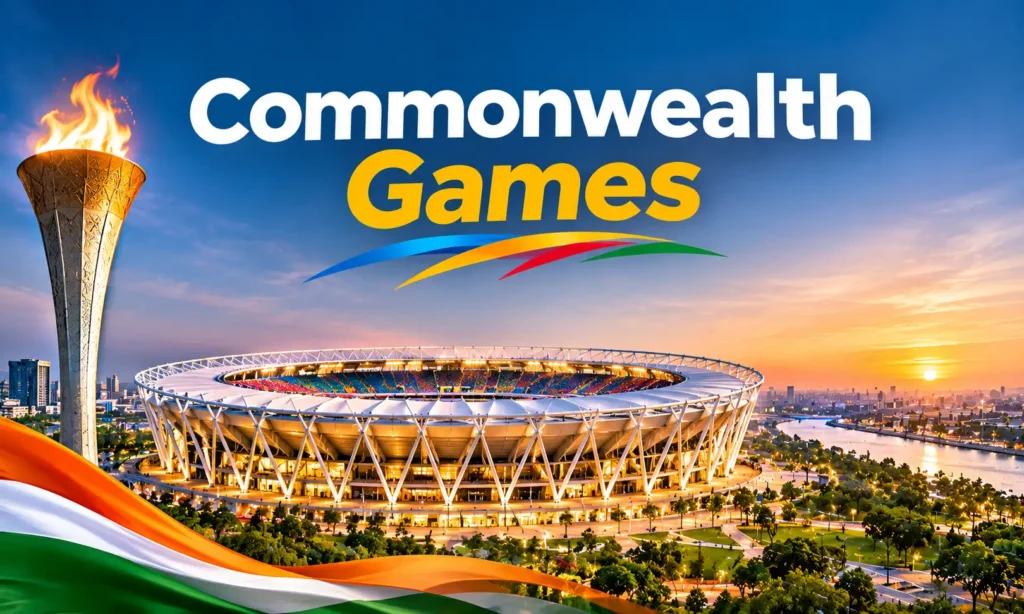
India is getting a second chance at hosting the Commonwealth Games.
In November 2025, Ahmedabad was confirmed as host of the Commonwealth Games 2030 Games, the centenary edition of the event. It will be India’s first time hosting since Delhi in 2010.
For anyone watching Gujarat real estate, the obvious question is what this means for Dholera. The honest answer is more interesting than most sales pitches suggest.
Dholera is not a Games venue. But Delhi’s experience shows that a mega event’s lasting value rarely sits inside the stadium. It sits in the roads, rail lines and airports that remain after the crowds go home. Dholera is already building those.
This guide compares the two Games, explains what Delhi actually left behind, and connects those lessons to Dholera.
Commonwealth Games 2030 vs Delhi 2010 at a Glance
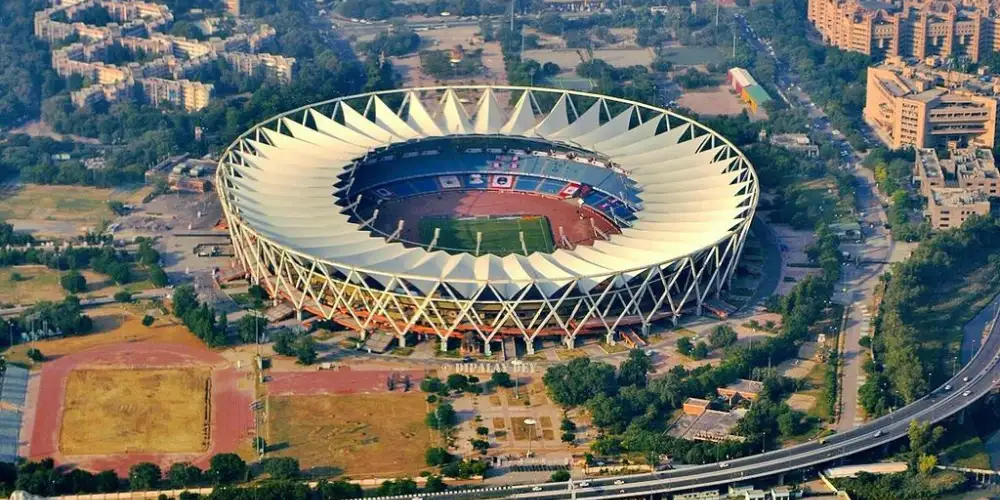
The two editions share a country, but they differ in scale, approach and purpose.
| Factor | Delhi 2010 | Ahmedabad 2030 |
| Edition | 19th | 24th (centenary) |
| Dates | 3 to 14 October 2010 | October 2030 |
| Host area | Delhi | Ahmedabad, with events also planned in Gandhinagar, Vadodara and Ekta Nagar |
| Teams | 71 | 74 expected |
| Sports | 21 | 17 planned |
| Main venue | Jawaharlal Nehru Stadium (60,000 seats) | Narendra Modi Stadium (132,000 seats) |
| Operating cost | Just over ₹2,600 crore, against a ₹635 crore estimate | ₹3,000 to ₹5,000 crore targeted, as reported by PTI |
| Overall spend | Reported at over ₹70,000 crore; estimates vary | Not finalised |
| Long-term goal | Showcase Delhi as a global city | Build towards India’s 2036 Olympic ambition |
The table shows one big shift. Delhi set out to prove that India could host a major multi-sport event. Ahmedabad is treating the Games as one stage in a longer plan.
What Delhi 2010 Really Left Behind
Delhi’s Games are remembered for two things: the problems before them and a strong performance during them.
Preparations ran late and drew corruption allegations. Yet the event went ahead, and India finished second on the medal table with 101 medals, including 38 golds. It was the country’s best Commonwealth Games result.
The financial story was harder to celebrate. Operating costs ended up several times above the early estimate, and the overall bill climbed far past early projections.
Sports infrastructure also proved a mixed legacy. Stadiums need regular events to stay useful, and critics questioned how well Delhi’s venues would serve the city afterwards.
The transport legacy was different. The Games added urgency to the Delhi Metro expansion, a new airport terminal and 26 flyovers. Those assets are still used by millions of people every day.
What Happened to Delhi Property?
Property consultants at JLL reported that residential prices around the Games Village in East Delhi rose by 10 to 15 percent in the period leading up to the event. Better infrastructure was the main reason given.
But the wider record offers two useful cautions.
First, the Metro was already moving markets before the Games arrived. A 2006 Business Standard report described prices climbing in Dwarka and in Metro-linked East Delhi neighbourhoods, years before the opening ceremony.
Second, an event address did not guarantee quick sales. In 2013, more than 600 of the 1,168 Games Village apartments were still reported as unsold. Those homes faced their own legal and construction disputes, so they are not a typical case. They still show that a Games link alone cannot carry a property.
The lesson from Delhi is simple. Connectivity outlasted the event, and connectivity is what buyers kept paying for.
How Ahmedabad Commonwealth Games 2030 Is Planned Differently
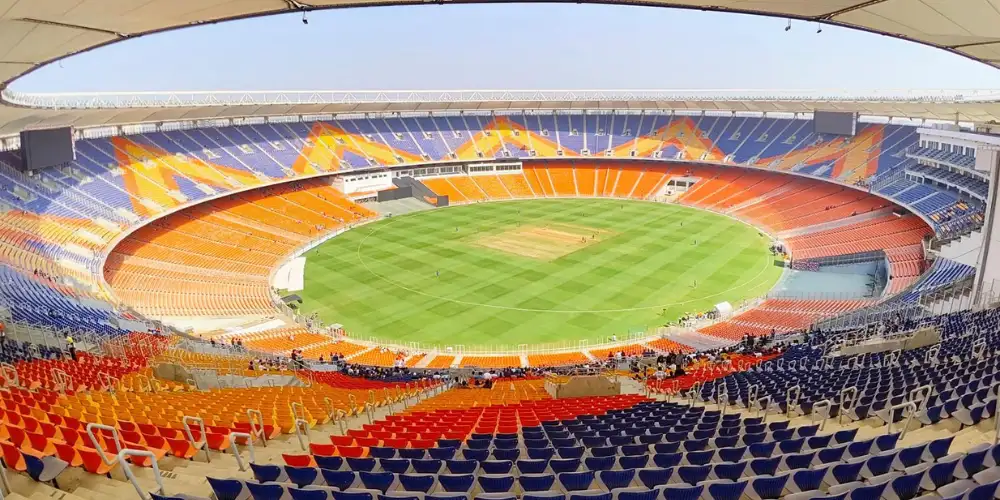
Gujarat officials say they have taken lessons from 2010, and the plan reflects that in several ways.
More use of existing venues. Officials have said many venues can host events with modifications. Narendra Modi Stadium is already built, and the Veer Savarkar Sports Complex opened in 2025.
An earlier timeline. Delhi was still finishing work close to the Games. Gujarat has said major facilities should be ready by late 2028 or early 2029.
Tighter organisation. PTI reported that a not-for-profit company model, which the CAG recommended after Delhi, was under serious consideration for the organising committee. Delhi’s committee was registered as a society.
A leaner sports programme. A programme capped at 17 sports keeps the event smaller than Delhi’s 21. Commonwealth Sport has also spoken of aiming for a 60 percent reduction in hosting costs compared with earlier editions.
State-level funding. Gujarat’s 2026-27 budget earmarked ₹1,278 crore towards making Ahmedabad an “Olympic-ready city”. The government expects the Games to draw investment into tourism, hospitality, transport and services.
None of this guarantees a smooth event. Infrastructure estimates are still being worked out, and large projects often run into delays. But the planning model is clearly different from 2010.
Where Dholera Fits Into the Bigger Picture
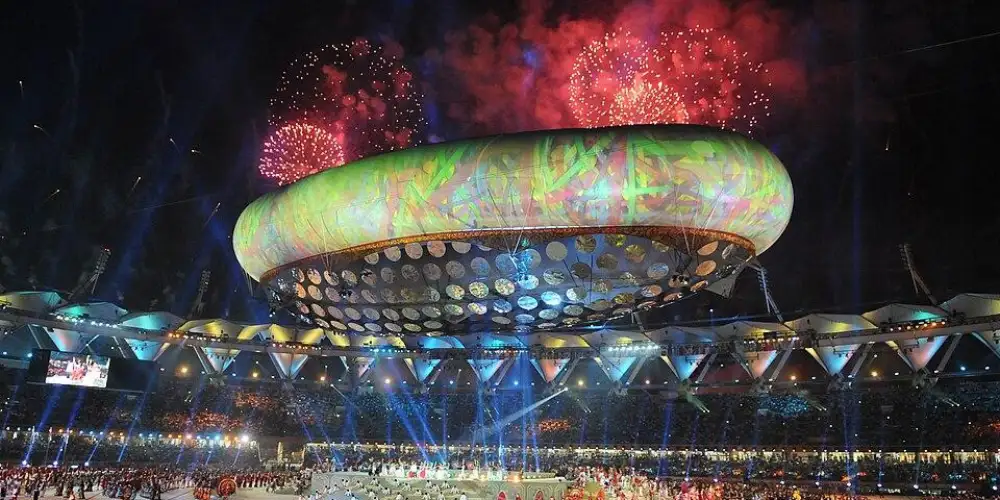
Here is the clear position: no Commonwealth Games 2030 event has been announced for Dholera. Any claim that the Games alone will transform Dholera should be treated with caution.
Dholera’s case stands on its own foundations, and the Games add to that story rather than create it.
Dholera Special Investment Region is a planned greenfield city of about 920 sq km within the Delhi-Mumbai Industrial Corridor. Its main growth drivers are infrastructure and industry.
Ahmedabad-Dholera Expressway. This 109 km road was inaugurated on 31 March 2026. Reports put the drive between Ahmedabad and Dholera at roughly 45 minutes to an hour, depending on your start point.
Dholera International Airport. The airport is being built on 1,426 hectares at Navagam. In October 2026, the Gujarat Chief Minister was told it should be operational by the end of the year. Phase 1 is planned for about 1.5 million passengers a year.
Semi-high-speed rail. A ₹20,667 crore rail line linking Ahmedabad and Dholera has been approved. It is a future project, so construction progress is worth tracking.
Semiconductor fab. Tata Electronics is building a ₹91,000 crore chip plant in Dholera. Commercial production is now expected in mid-2028, which is later than the first target of December 2026.
Compare this with Delhi. The 2010 Games sped up transport projects inside a crowded city. Dholera already has much of its transport spine underway, with the Games arriving as a regional tailwind.
The timing is also worth noting. The airport is targeted for the end of 2026, the chip plant’s commercial production for mid-2028, and major Games facilities for late 2028 or early 2029. If those dates hold, the region’s biggest milestones will fall within a few years of each other, though any one of them could slip.
How the Games Could Help Dholera Indirectly
Three effects are plausible, though none is guaranteed.
- Visibility. Global attention on Ahmedabad Commonwealth Games 2030 can bring more investors and businesses to study the wider region, including Dholera.
- Regional capacity. A growing Ahmedabad will need more logistics, industrial and residential space. Dholera is a large planned area within expressway reach.
- Long-term momentum. If India pursues the 2036 Olympics, Gujarat’s infrastructure push could continue well beyond Commonwealth Games 2030.
The practical takeaway is that the Games matter most as a catalyst for the region, while Dholera’s own projects remain the factors to watch.
What Dholera Plot Buyers Should Take From This
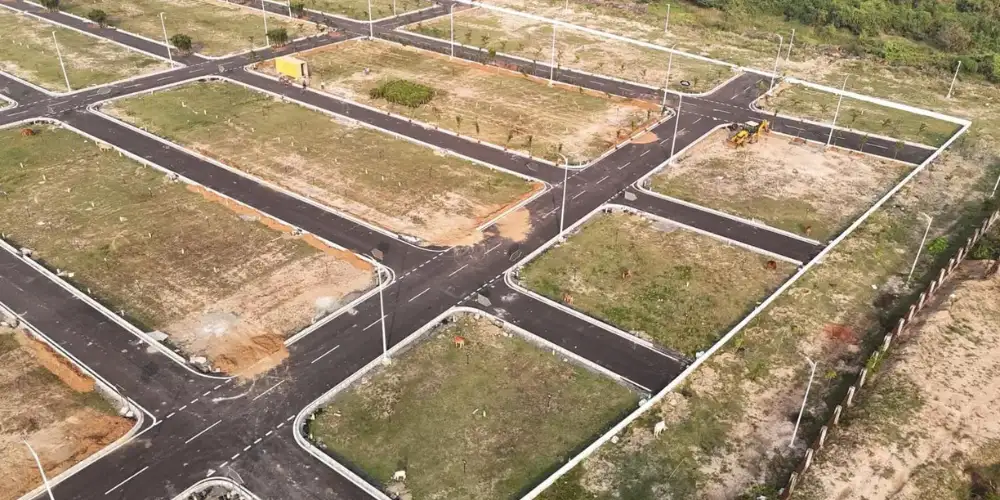
Delhi’s experience points to a sensible way to approach Dholera today.
Follow infrastructure, not headlines. Ask how a plot connects to the expressway, airport and activation area. A “Commonwealth Games 2030” tag on a brochure tells you nothing about the land itself.
Think beyond 2030. Delhi’s lasting gains came from assets used daily, long after the closing ceremony. Dholera is a long-term city build, and its pace will depend on industry and residents arriving.
Verify every project. Infrastructure helps an area, but your purchase depends on the individual plot. Before you pay any money, check:
- RERA registration of the project
- Clear land title and approvals
- The plot’s zone under the Dholera development plan
- Road access and distance to key corridors
- Drainage and site conditions, seen in person
- Payment terms, in writing
Keep your expectations realistic. No one can promise a specific return. Timelines shift, as the chip plant shows, and land is a less liquid asset than many investors expect.
Exploring Dholera With Angel Nova
Angel Nova works with buyers who want to understand Dholera before committing. Our team can walk you through project documents, plot locations and connectivity, so your decision rests on verified details rather than event hype.
Ready to take a closer look? Speak to the Angel Nova team to schedule a site visit and review the paperwork for yourself.
Frequently Asked Questions
In Ahmedabad, Gujarat, in October 2030. Events are also planned in Gandhinagar, Vadodara and Ekta Nagar.
No. The Games follow a four-year cycle, so the next edition after Glasgow 2026 is Ahmedabad 2030.
No Dholera venue has been announced. Its link to the Games is regional and indirect.
It has a smaller sports programme, more use of existing venues, an earlier readiness target and a clear link to India’s 2036 Olympic ambition.
JLL reported a 10 to 15 percent rise around the Games Village before the event. Better infrastructure was the main driver.