
Ahmedabad Metro Phase 3 has crossed a decisive checkpoint. The proposed Thaltej Gam–Sanathal corridor, extended up to Badrabad, has been cleared by the Public Investment Board (PIB) — and the Gujarat Metro Rail Corporation (GMRC) has already begun pre-construction activities on the ground. It is a 60 km expansion that does more than add stations to a city map. It quietly lays the foundation for something Ahmedabad has been talking about for years: a metro ride to the upcoming Dholera international airport.
Here is what the clearance actually means, where the line will run, and what still stands between the plan and the first pillar.
PIB Clears the Thaltej Gam–Sanathal Corridor Up to Badrabad
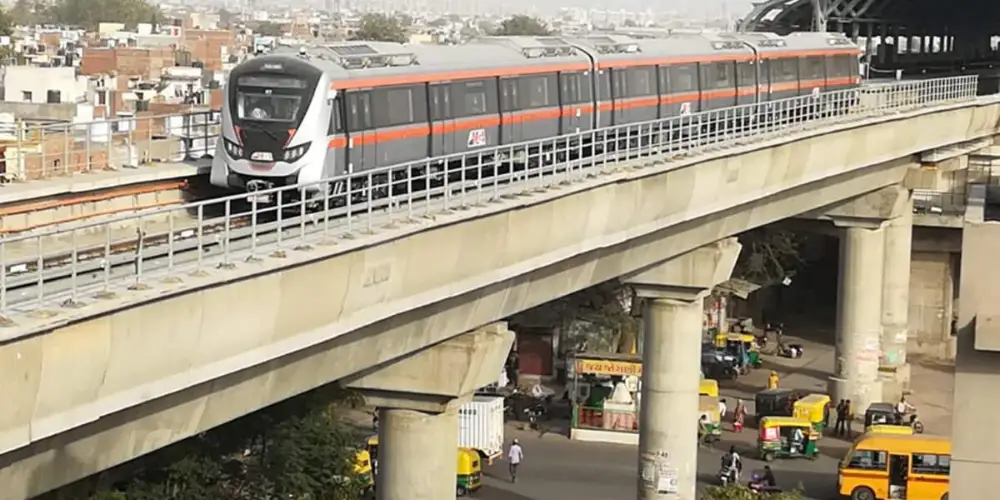
The headline development is the Public Investment Board’s clearance for Phase III’s expansion — the proposed Thaltej Gam–Sanathal corridor, taken further up to Badrabad. PIB clearance is the stage where a large infrastructure proposal is examined on its investment merits before it moves up the approval chain, so getting past it is a meaningful signal that the project has been found viable rather than aspirational.
With that clearance in hand, GMRC has not waited around. The corporation has initiated pre-construction activities, which is usually the strongest indicator that an agency expects a project to proceed rather than stall. The formal go-ahead for construction, however, still rests with the Centre.
A 60 km Expansion With 41 Elevated Stations
The scale is what makes this phase significant. At 60 km, the expansion is not a short spur or a two-station extension — it is a full corridor, planned with 41 elevated stations along its length.
Elevated construction, as opposed to underground, typically suits peripheral and semi-urban stretches where land is more available and the disruption of tunnelling is harder to justify. For a corridor running largely along the city’s outer edge, an elevated alignment fits the geography of where Ahmedabad is actually growing — outward, along its ring road and canal-road belts, rather than inward.
The Route: Shilaj Canal Road to Badrabad, Along the Ring Road
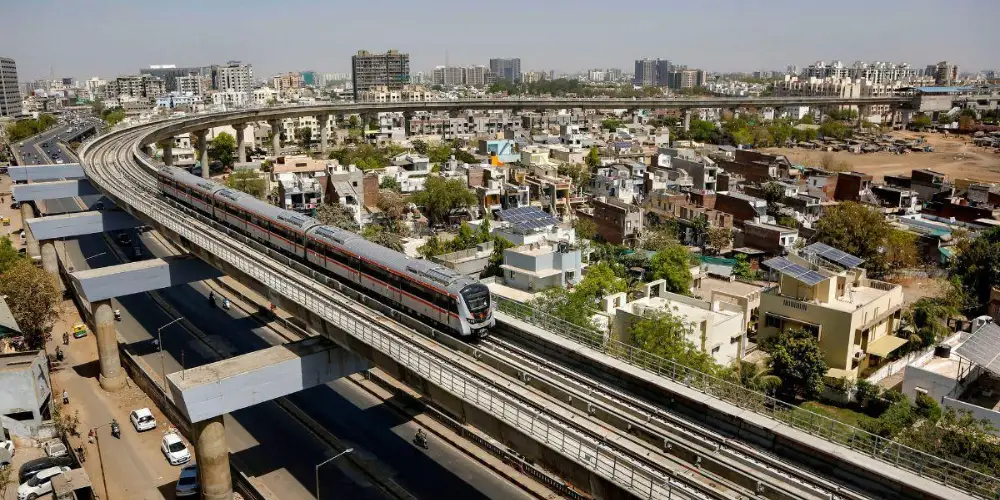
The corridor will originate from the Shilaj Canal Road area and run parallel to the Sardar Patel Ring Road. Along the way it passes through Bopal Crossroads and Shantipura Crossroads before touching Badrabad.
Anyone who has driven this stretch will recognise what that list of names represents. Bopal and Shantipura sit in the belt of west and south-west Ahmedabad that has absorbed a large share of the city’s residential expansion. Running the metro parallel to the Sardar Patel Ring Road places it alongside the corridor that already carries much of this movement by road — which is precisely the logic of rail transit: put the line where the traffic already is, not where planners wish it were.
Thaltej Gam to SWASA: The Godhavi Connection
The alignment also connects Thaltej Gam with the South West Ahmedabad Sports Arena (SWASA) at Godhavi. To get there, it traverses the fast-growing canal road belt near Shilaj Crossroads, and from that point runs parallel to the railway line before reaching SWASA.
Two details in that description are worth pausing on. The first is the phrase “fast-growing” — the canal road belt near Shilaj has been one of the more active development zones on this side of the city, and a metro alignment through it is as much a bet on future ridership as a response to present demand. The second is the decision to run parallel to the railway line. Following an existing transport right-of-way is a familiar engineering strategy: it tends to simplify land questions and reduce the number of new crossings a project has to negotiate.
Connecting a sports arena into the network also gives the corridor an event-driven demand profile alongside its daily commuter base — the kind of destination that produces sharp, concentrated passenger surges rather than a steady trickle.
Pre-Construction Work Is Already Under Way
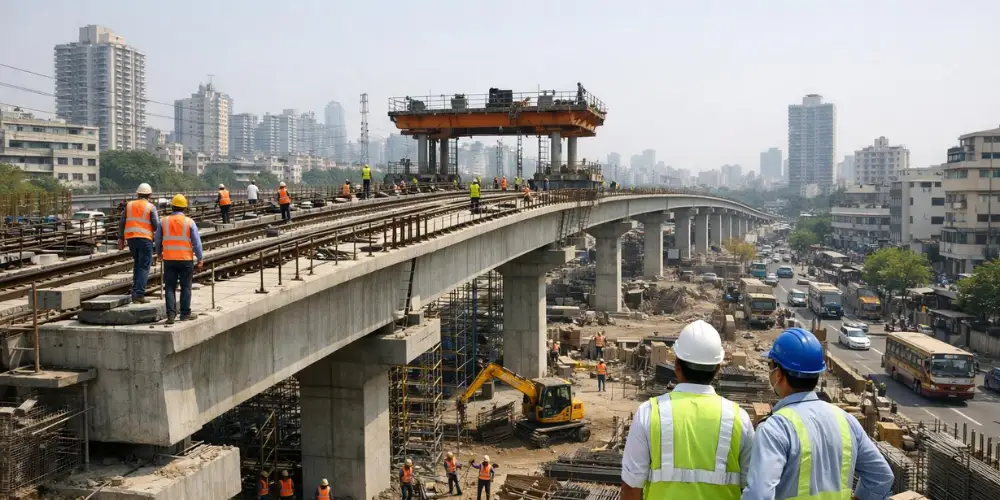
While the file moves through its final approvals, work of a different kind has started. GMRC’s pre-construction activities include detailed design, geotechnical investigations and utility diversion processes — all already under way.
This is the unglamorous half of metro building, and it is often where timelines are won or lost. Geotechnical investigation determines what the ground beneath the alignment can actually carry. Utility diversion — relocating the water lines, power cables, sewage and telecom infrastructure sitting in the path of future piers — is routinely the single most underestimated task in Indian urban rail projects. Getting it moving before the construction order arrives is exactly how an agency buys itself time later.
Why Dholera Is the Real Destination
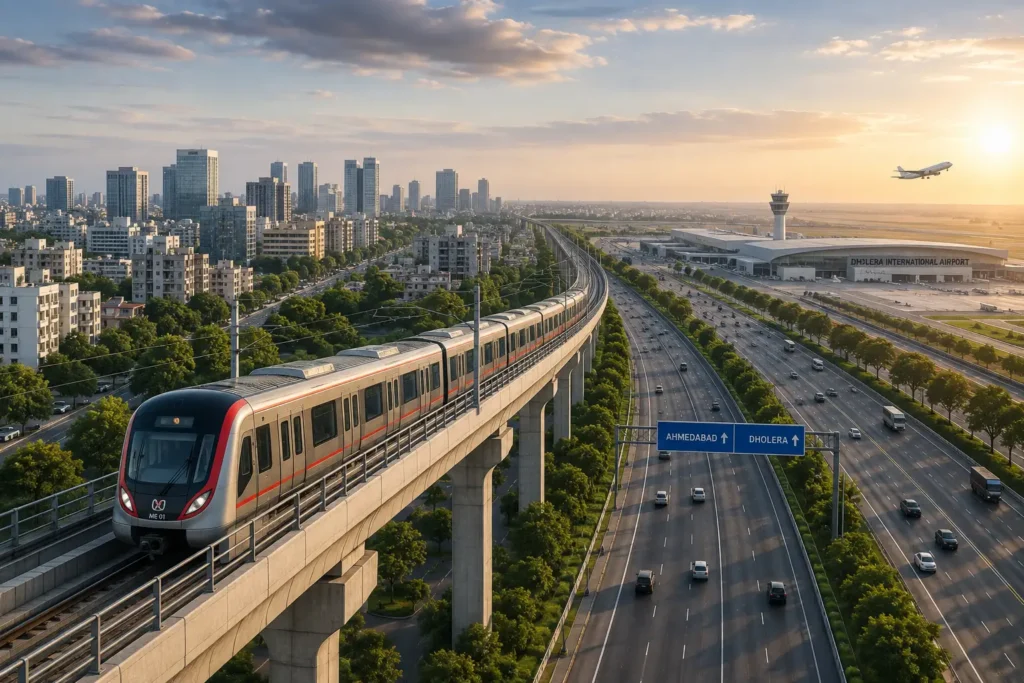
The 60 km expansion is described as creating the foundation for future metro connectivity to the upcoming Dholera international airport. The proposed onward link runs from Badrabad to the airport — which is why Badrabad, rather than Sanathal, is the terminus that matters here.
Officials have framed the extension as aligning with the state’s long-term transport vision by bringing the metro corridor closer to the Ahmedabad–Dholera Expressway. Read together, the intent is fairly clear: build the expensive urban section first, end it at a point that faces Dholera, and leave the door open for the airport connection to be added as a defined next step rather than a fresh start.
It is a sequencing decision more than a construction decision — and a sensible one. Airport metro links that are planned only after an airport opens almost always arrive late.
What Happens Next: The Wait for Union Cabinet Approval
The current status is precise: approved by the Public Investment Board, awaiting the Union cabinet’s approval. Construction will begin only after the Centre clears it.
So the practical picture is a project in a well-defined holding pattern — cleared on investment merit, physically underway in its preparatory stages, and waiting on one remaining sign-off before contractors can be mobilised and piers can start going up.
The Takeaway
Ahmedabad Metro Phase 3 is being built around a longer horizon than the city’s existing network. A 60 km elevated corridor with 41 stations, tracing the Sardar Patel Ring Road through Bopal, Shantipura and Godhavi to Badrabad, serves the western growth belt today — and positions the network for the Dholera airport link tomorrow. With design, geotechnical and utility work already moving, the file’s next stop in Delhi is the milestone worth watching.
Angel Nova Group is known among the top developers in Dholera Smart City, offering future-ready residential and commercial opportunities near major infrastructure developments. Dholera ke latest updates, new launches, price revisions, site visit schedules aur upcoming expo announcements sabse pehle paane ke liye: 💬 WhatsApp Community
FAQs
It is the proposed Thaltej Gam–Sanathal corridor, extended up to Badrabad — a 60 km expansion of the Ahmedabad Metro network.
The Public Investment Board (PIB) has cleared it. It is now awaiting the Union cabinet’s approval.
The corridor is planned with 41 elevated stations across its 60 km length.
It originates from the Shilaj Canal Road area, runs parallel to the Sardar Patel Ring Road, passes through Bopal Crossroads and Shantipura Crossroads, and touches Badrabad. It also connects Thaltej Gam with SWASA at Godhavi.
Not in this phase. The 60 km expansion creates the foundation for a proposed future link from Badrabad to the Dholera international airport.
Yes. GMRC has begun pre-construction activities, including detailed design, geotechnical investigations and utility diversion.