


Gujarat has six of the 12 chip manufacturing projects approved under the India Semiconductor Mission (ISM), more than any other state. Three are already producing in Sanand: Micron, Kaynes Semicon and CG Semi. The largest semiconductor plant in Gujarat is the ₹91,000 crore Tata Electronics–PSMC fab in Dholera, India’s first commercial wafer fab, which is under construction. Dholera has a second approved unit (Crystal Matrix), and Suchi Semicon is setting up in Surat.
Gujarat has become the centre of India’s chip push. The state government says the six approved projects add up to about ₹1.24 lakh crore of investment and more than 50,000 jobs. This guide lists every approved semiconductor plant in Gujarat, explains where the Tata semiconductor plant Dholera project stands in late 2026, and looks at what the build-out means for jobs, housing and land around Dholera SIR.
List of Semiconductor Plants in Gujarat (2026)
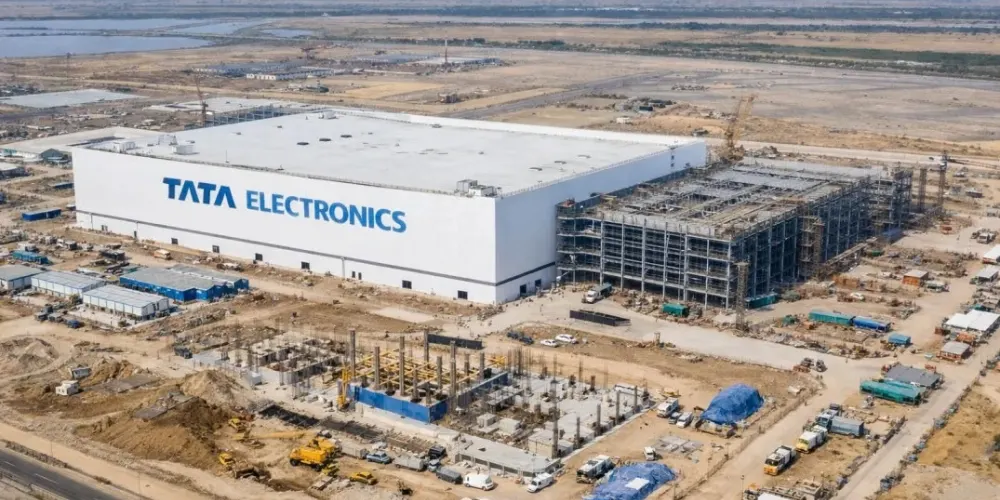
The table below covers every semiconductor plant in Gujarat approved under ISM, with figures taken from Cabinet decisions, the ISM scheme page and company announcements.
| Company | Location | Type | Investment | Status (Oct 2026) |
| Tata Electronics, with PSMC (Taiwan) | Dholera SIR | Fab (300 mm wafer fabrication) | ₹91,000 crore | Under construction; SEZ notified April 2026 |
| Micron Technology | Sanand | ATMP (memory) | ₹22,516 crore | Operational; inaugurated 28 Feb 2026 |
| CG Semi (CG Power with Renesas and Stars Microelectronics) | Sanand | OSAT | ₹7,584 crore | G1 unit in commercial production since 4 July 2026; G2 under construction |
| Kaynes Semicon | Sanand | OSAT / ATMP | ₹3,307 crore | Operational; inaugurated 31 Mar 2026 |
| Crystal Matrix Ltd | Dholera SIR | Compound-semiconductor (GaN) fab + ATMP for mini/micro-LED displays | about ₹3,068 crore | Approved by Union Cabinet, 5 May 2026 |
| Suchi Semicon | Surat | OSAT (discrete semiconductors) | ₹868 crore | Approved by Union Cabinet, 5 May 2026 |
Fab vs ATMP/OSAT, in plain terms: a fab makes the chip itself by printing circuits onto silicon wafers. ATMP and OSAT units take finished wafers, then cut, package and test them into the chips that go onto circuit boards. Packaging units can be built in two or three years; a fab takes longer and costs far more. That is why Sanand is already shipping chips while the Dholera fab is still being built, and why the Dholera project matters so much: it is the only front-end fab in the list. If you compare each semiconductor plant in Gujarat by the jobs, suppliers and land demand it pulls in, a fab sits in a different league from a packaging unit.
Sanand is the most mature chip cluster in the state today, while Dholera is where the heavy front-end investment is going. Outside Gujarat, the other approved projects are in Assam (Tata’s Jagiroad assembly plant), Uttar Pradesh (HCL–Foxconn), Odisha and elsewhere, but no state comes close to Gujarat’s six.
Tata Electronics–PSMC Fab in Dholera: Status in 2026
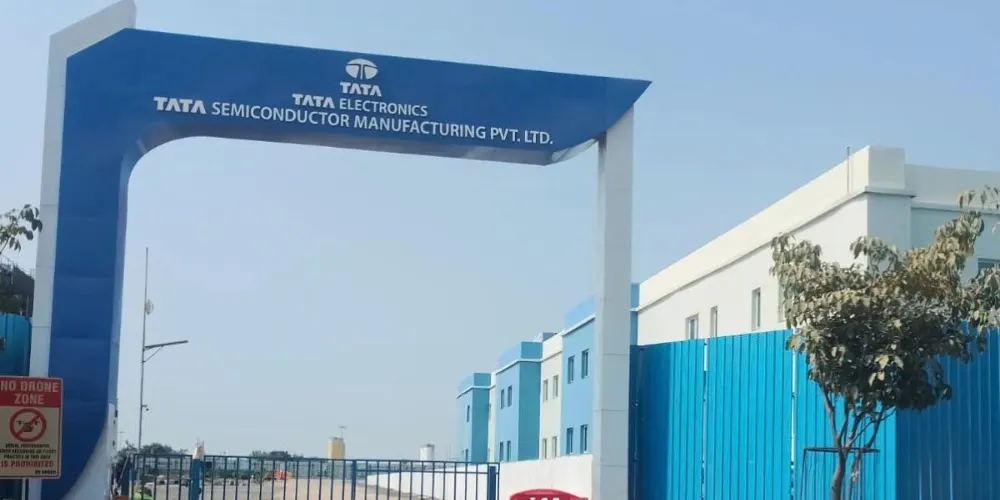
The Tata semiconductor plant Dholera project is the single largest semiconductor plant in Gujarat and the first front-end fab in India, so it deserves a closer look.
Investment. The Union Cabinet approved the fab on 29 February 2024 at an investment of ₹91,000 crore, and that is the official figure used by the government and Tata Electronics since. The Centre provides 50% of eligible project cost under a Fiscal Support Agreement signed in March 2025, and the Gujarat government adds a further 20%.
What it will make. The plant is designed for 50,000 wafer starts a month on 300 mm wafers. Taiwan’s Powerchip Semiconductor Manufacturing Corporation (PSMC) is licensing mature process technology from 28 nm to 110 nm, suited to power management chips, display drivers, microcontrollers and automotive, mobile and AI-related logic.
Key milestones so far:
- Feb 2024 – Union Cabinet approves the fab.
- Mar 2024 – Prime Minister lays the foundation stone at Dholera.
- Sep 2024 – Tata and PSMC sign the definitive technology transfer agreement.
- Mar 2025 – Fiscal Support Agreement signed with ISM.
- Apr 2026 – Government notifies a Special Economic Zone for Tata Semiconductor Manufacturing at Dholera.
- May 2026 – Tata Electronics and ASML sign an agreement to deploy ASML lithography tools at the fab.
- Jul 2026 – The Ministry of Electronics and IT says the fab is progressing rapidly.
- Sep 2026 – At SEMICON India, Tata Electronics’ CEO says the fab is on track to meet its commitments.
How complete is it? Neither Tata Electronics nor the government has published an official percentage-complete figure. Media reports in mid-2026 put civil construction at roughly 50%, with cleanroom work and tool installation next. Trial production has been reported as targeted for around December 2026, with commercial output ramping through 2027 and 2028. For anyone tracking the Tata semiconductor plant Dholera timeline, treat these as targets: fab start-ups commonly slip by months, and first wafers are not the same as full-scale production.
The Dholera Semiconductor Ecosystem
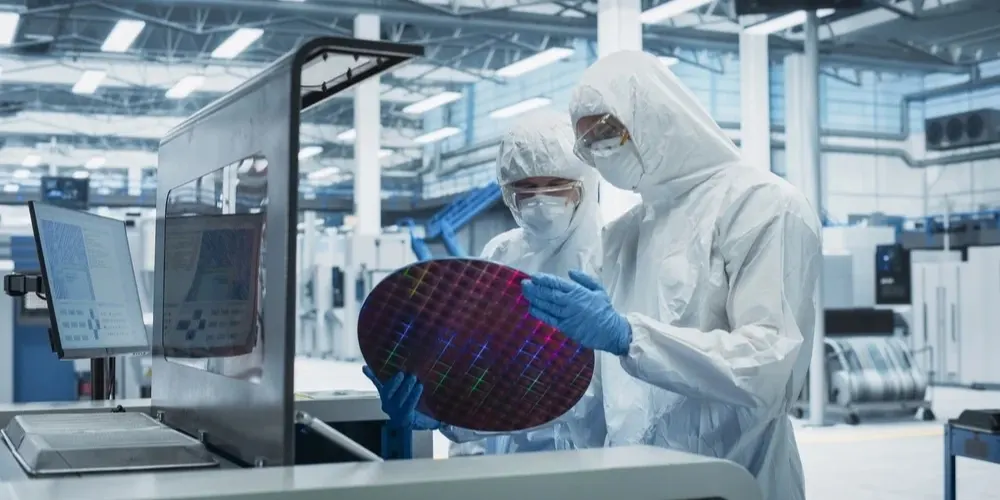
A fab never works alone. It needs gas and chemical suppliers, equipment service teams, specialised warehouses and maintenance contractors close by. The Dholera semiconductor cluster is now taking shape around the Tata site.
Vendor park. At SEMICON India in September 2026, Tata announced a 363-acre plug-and-play Tata Electronics vendor park near the fab, developed with Singapore’s Ascendas Firstspace. It is meant to house a supplier base of around 450 vendors.
Logistics. DHL plans a DHL semiconductor warehouse at Dholera with an initial investment of about ₹50 crore, its first dedicated semiconductor warehouse in India, targeted to open by August 2027. Japan’s NX Group (Nippon Express) and a Sojitz–NRS partnership with Tata are also planning chip-logistics facilities in the area.
Equipment and lithography. ASML is the confirmed lithography partner for the Tata fab. Separately, Canon has said it is in talks with India’s approved chip projects and plans to bring its lithography systems, plus technology and service centres, to India once orders are confirmed; read more on Canon lithography plans.
More partners. Tata has also signed agreements with Nexperia (to manufacture its MOSFETs at the Dholera fab), Fujifilm (to localise semiconductor materials) and Kelington (for fab infrastructure systems). Add Crystal Matrix’s GaN display-module plant, and Dholera is becoming the second big chip node in the state after Sanand.
Jobs and Housing Demand

Jobs. When the Cabinet cleared the Tata fab in February 2024 alongside two other units, it estimated 20,000 direct advanced-technology jobs and about 60,000 indirect jobs across the three projects. Tata Electronics says the Dholera fab alone will create more than 20,000 direct and indirect skilled jobs, and that its longer-term multi-fab plan for Dholera could create over one lakh. Across all six projects, the Gujarat government expects more than 50,000 jobs.
Housing. Each semiconductor plant in Gujarat has its own hiring curve, and at Dholera those jobs arrive in waves. Construction workers come first, then engineers and technicians as tools are installed and production ramps up, followed by staff at the vendor park, logistics hubs and service providers. The Gujarat government has allotted Tata 10 acres in Dholera SIR for its own employee housing of around 530 apartments, targeted for mid-2027, and the state is pushing more residential projects in the Dholera activation area, the first fully serviced zone of the new city.
For buyers, the practical point is timing: the strongest rental and housing demand is likely once the fab and vendor park are running, not while foundations are being poured.
What It Means for Dholera Land: Benefits and Risks
Benefits
- An anchor tenant with government backing. The ₹91,000 crore fab has central and state fiscal support, an SEZ notification and global partners such as PSMC and ASML, making it far harder to abandon than an announcement-stage project.
- A new city, not an old industrial belt. No other semiconductor plant in Gujarat sits inside a planned greenfield city, so housing, offices and services around the fab still have to be built.
- A cluster, not a single factory. The vendor park, logistics warehouses and a second ISM unit mean demand for industrial, commercial and residential space comes from many employers.
- Infrastructure arriving together. The Ahmedabad–Dholera expressway, the Dholera international airport (which completed a trial landing in 2026) and the city’s planned utilities all support long-term growth.
Risks
- Timelines slip. Fab schedules worldwide often move by quarters or years. If you are buying with a short holding period, factor in delays.
- Location matters. The fab sits in a notified zone within Dholera SIR. Plots far outside planned town-planning schemes, or on land without proper conversion, will not benefit in the same way.
- Marketing claims. “Next to the Tata plant” is used freely. Check the actual distance, the zoning in the Dholera SIR development plan, title documents, NA status and RERA registration before you pay.
- Price run-ups. Land prices in Dholera have already risen on the semiconductor news. Buy for the long term, at a price that still makes sense if the ramp takes longer than expected.
This is general information, not investment advice. Do your own checks or speak to a qualified advisor before buying.
Plan Your Dholera Investment with Confidence
Every semiconductor plant in Gujarat adds to the state’s industrial story, but Dholera is where the front-end fab, vendor park and logistics hubs are coming together. If you want to own a plot in a planned location with clear documentation, talk to our team about our Angel Aerocity project, and we will walk you through approvals, location and pricing.
Frequently Asked Questions
Three are running in Sanand: Micron’s ATMP (inaugurated February 2026), Kaynes Semicon’s OSAT (March 2026) and CG Semi’s G1 OSAT unit (commercial production from July 2026). The Dholera fab is still under construction.
₹91,000 crore, as approved by the Union Cabinet in February 2024. The Centre covers 50% of eligible project cost and Gujarat adds 20%.
Tata has not announced a firm public start date. Reports point to trial production around the end of 2026, with commercial output scaling through 2027–28, and in September 2026 Tata said the fab remains on track.
Six: Tata Electronics, Micron, CG Power (CG Semi), Kaynes Semicon, Crystal Matrix and Suchi Semicon. Two are in Dholera, three in Sanand and one in Surat.
The fab and its ecosystem are a strong long-term demand driver, but land prices already reflect some of that. Buy within planned zones, verify title and RERA status, and plan for a holding period of several years.